
Employee engagement worldwide sits at just 20% according to Gallup's 2025 data. Break rooms alone won't fix that number, but they're one of the few daily touchpoints where a company can show employees it actually cares. Nearly 4 in 10 workers say they'd choose a break featuring good coffee, tea, and snacks over almost any other perk, according to Canteen's research.
This guide breaks down what a 2026-ready break room actually needs: beverages, snacks, smart technology, furniture, and sustainability, in that order of priority.
Key Takeaways
- Break rooms in 2026 double as wellness and convenience hubs, not coffee corners alone
- Diverse, health-conscious food and drink options rank among top workplace amenities
- Smart coolers and micro-markets give teams fresher choices with cashless self-service
- Compostable cups, Fair Trade coffee, and other eco supplies are now baseline expectations
- Full-service partners like CDS Refresh handle stocking, tech, and day-to-day upkeep
Beverage Station Essentials: Beyond Basic Coffee
Coffee quality isn't a nice-to-have anymore. It's baseline infrastructure. An industry survey found 85% of employees believe coffee breaks are important, and workers report feeling more valued when offered quality options, per Nestle Professional's research.
Specialty coffee demand backs that up: 46% of American adults drank a specialty coffee in the past day as of mid-2025, according to the National Coffee Association.
What a Modern Beverage Station Needs
- Brand-name coffee partnerships — Starbucks, Lavazza, Peet's, or Pelican Rouge elevate perceived quality instantly
- Filtered, sparkling, and mineral water — bottle-free coolers cut plastic waste and meet rising sparkling-water demand (Crafty's 2025 data)
- Tea and non-caffeinated options — inclusivity matters when not everyone runs on espresso
- Plant-based creamers — oat, almond, and soy are becoming standard dietary accommodations
Those pieces hold up best with managed equipment and restocking, not a one-time install. CDS Refresh sets up stations with machines such as Lavazza Expertine, Cafection Emblem, and Encore 29, paired with brands like Starbucks, Peet's, and Lavazza. Water programs cover direct-connect filtration plus sparkling and mineral options, with ongoing maintenance built in.

Smart Snacking: Food and Nutrition Essentials for 2026
Diet at work isn't a side issue. In a BYU-affiliated study of nearly 20,000 employees, workers with poor diets were 66% more likely to report productivity loss. Those who rarely ate fruits and vegetables at work were 93% more likely to report reduced output. Break room food choices carry real weight.
Operators are responding. Roughly 65% of convenience-services operators now cite client demand for healthier product mixes, according to NAMA's 2024-25 industry census.
Core Categories to Stock
- Fresh fruit — the simplest, most requested upgrade over packaged snacks
- Protein bars and nuts — sustained energy without the sugar crash
- Vegan and gluten-free options — no employee should be stuck with nothing to eat
- Fresh, locally prepared meals — sandwiches and salads that beat vending-only snacks
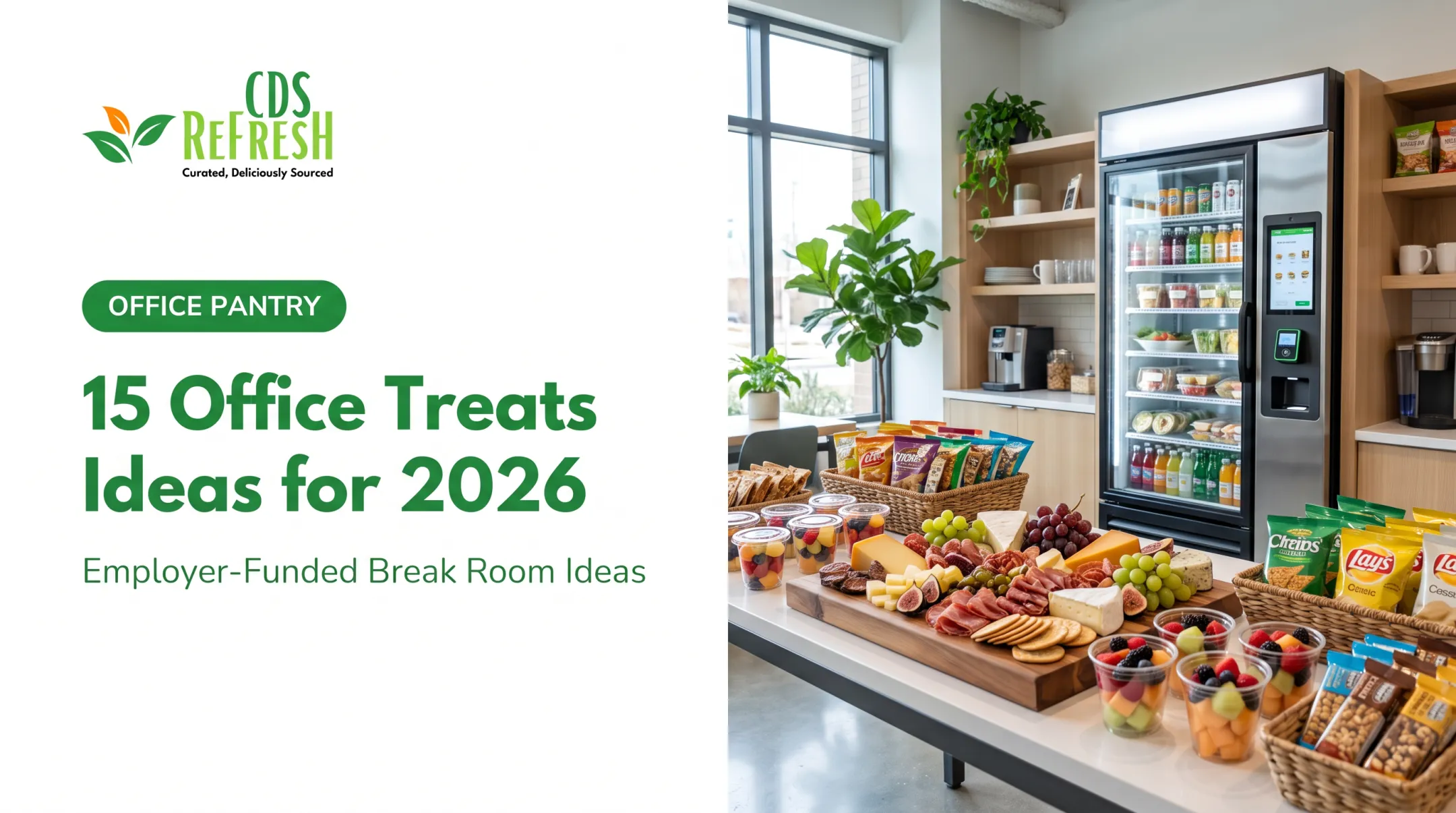
Rotating seasonal or themed selections keeps the mix interesting. CDS Refresh's pantry and micro-market programs let clients customize a stocked menu around consumer trends and dietary needs—including sugar-free, gluten-free, and dairy-free options—without adding work for the facilities team.

Technology-Enabled Break Rooms: Micro-Markets and Smart Coolers
Micro-markets have gone from niche to mainstream fast. Their share of convenience-services revenue jumped from 2% in 2014 to roughly 20% today, with annual growth of 41% since 2020, according to NAMA's 2024 industry report. Traditional vending still leads overall, but the two are increasingly treated as complementary, not competing.
What defines a tech-enabled break room:
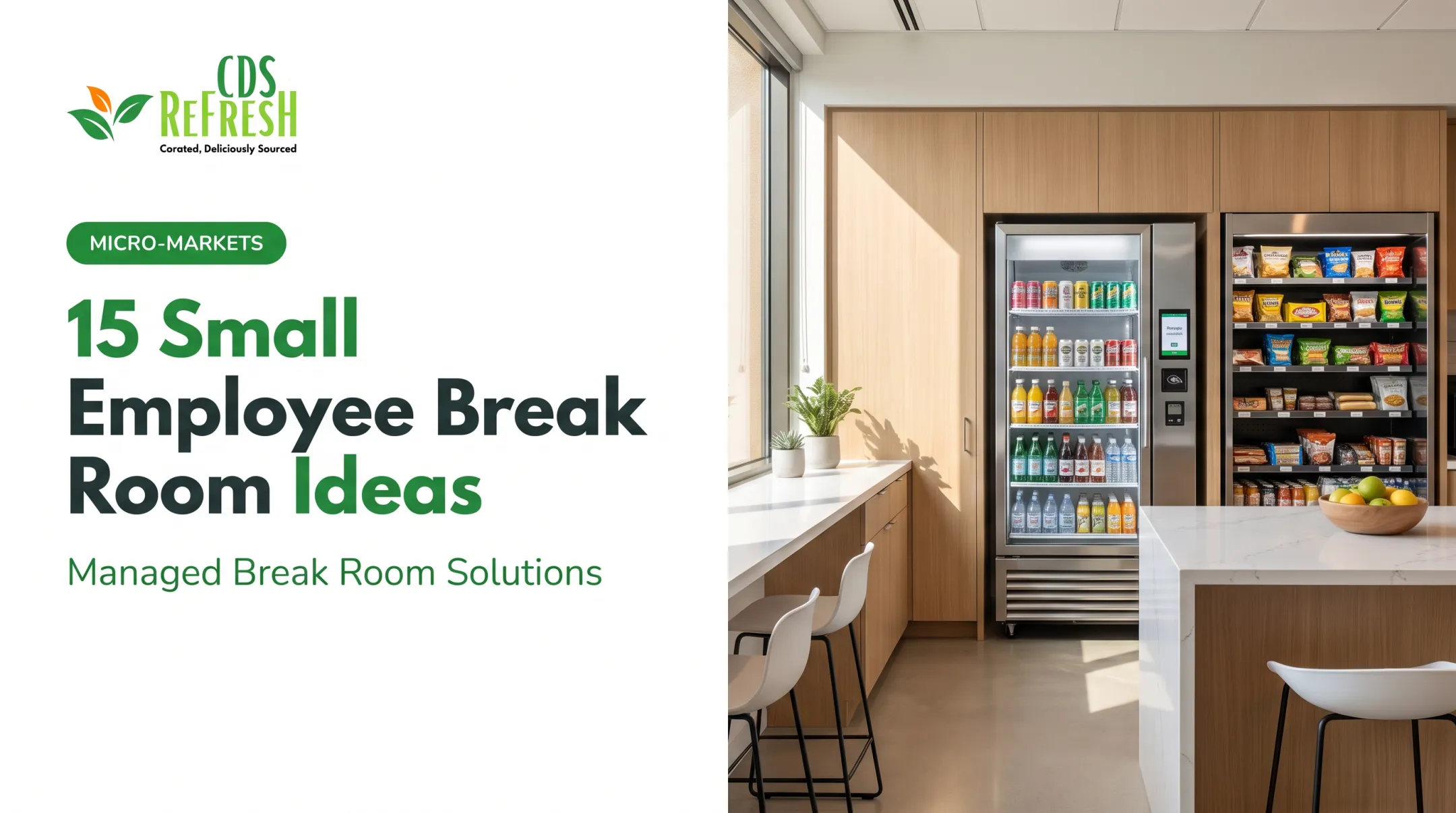
- Micro-markets — self-checkout mini convenience stores stocked with fresh food, snacks, and drinks, open 24/7
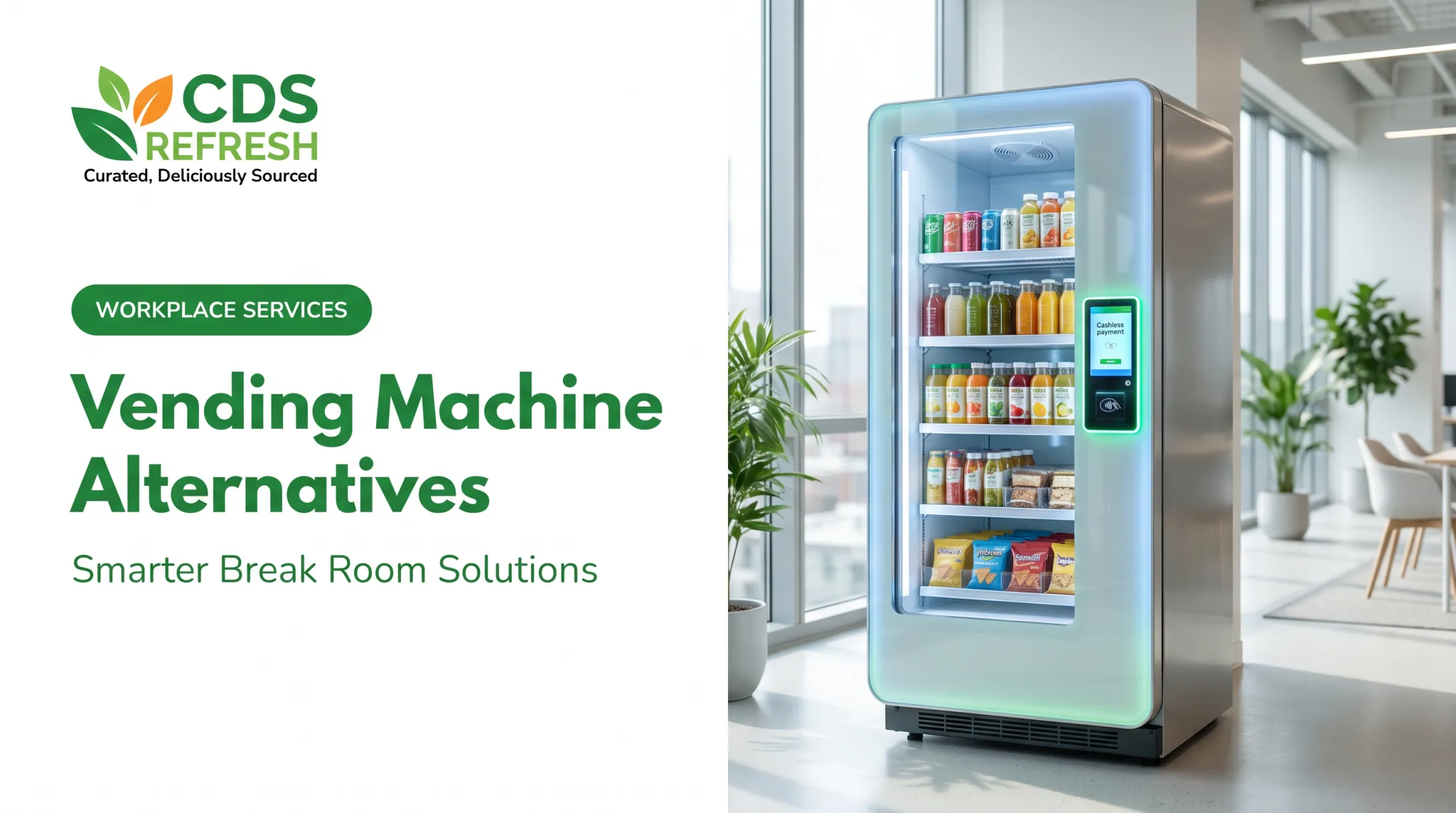
- AI-enabled smart coolers — grab-and-go refrigeration with built-in payment readers for pay-as-you-take purchasing
- Cashless payment — Apple Pay, Google Wallet, and card readers, now expected rather than optional
- Remote inventory monitoring — reduces stockouts and cuts down on manual checks by facilities staff
CDS Refresh's smart coolers include integrated payment readers and glass-door visibility for water, soda, and energy drinks. Its micro-markets support 24/7 self-checkout with cash, Apple Pay, and Google Wallet.
Real-time inventory monitoring helps keep shelves stocked without constant manual checks, which cuts oversight work for DFW-area facilities managers.

Break Room Furniture and Layout Must-Haves
A great beverage station means little if there's nowhere comfortable to enjoy it.
Gensler's 2025 Global Workplace Survey, covering nearly 17,000 office workers across 15 countries, found only 14% of employees actually want a traditional corporate environment. The rest want something warmer.
Essentials for the modern layout:
- Flexible seating — bistro tables for quick breaks, lounge chairs for longer rests
- Right-sized appliances — microwave, refrigerator, and dishwasher matched to headcount
- Distinct zones — quiet corners for solo focus and open areas for group gathering
This is the "resimercial" trend: blending residential comfort with office functionality. Think living-room textures next to functional break equipment, not a sterile cafeteria.

Sustainability and Wellness Additions
Eco-consciousness has moved from bonus to baseline. A 2022 Essity survey of 2,000 U.S. office workers found three out of four wanted a more eco-friendly workplace, and 58% described their current office as shamefully unfriendly to the environment.
Standard sustainability and wellness additions now include:
- Compostable cups and reusable dishware to cut single-use waste
- Biophilic touches: plants and natural light that support day-to-day well-being
- Basic wellness items: first-aid supplies and a quiet corner for decompression
CDS Refresh prioritizes compostable and biodegradable coffee cups and includes Fair Trade coffee and tea in its standard beverage programs. Those small choices help build a break room that employees actually notice and appreciate.
Frequently Asked Questions
What are the best break room supplies for modern offices in 2026?
Coffee and beverage variety, functional snacks (protein, gluten-free, dairy-free), and smart tech like micro-markets top the priority list. Layout and sustainability touches round out the experience.
How can I upgrade my office break room on a budget?
Start with coffee quality and healthy snack variety, the two upgrades employees notice fastest. Add tech and furniture improvements in later phases as budget allows.
What drinks should every office break room have?
At minimum: quality coffee, tea, filtered and sparkling water, and dairy-free creamer options. This covers most dietary preferences and keeps everyone satisfied.
What makes a good office break room?
A strong balance of quality food and drink, comfortable and flexible seating, and a layout that reflects company culture. It should feel like a place people want to be, not just pass through.
How often should break room supplies be restocked?
Most offices restock weekly or biweekly. Real-time inventory monitoring is better—it triggers restocks from actual usage so stockouts are fixed before employees notice.
Is it worth outsourcing break room management to a vending or micro-market provider?
Yes, for most offices. It saves facilities staff time on ordering and maintenance while keeping stock consistent. CDS Refresh's full-service model handles planning, restocking, and equipment upkeep end to end.