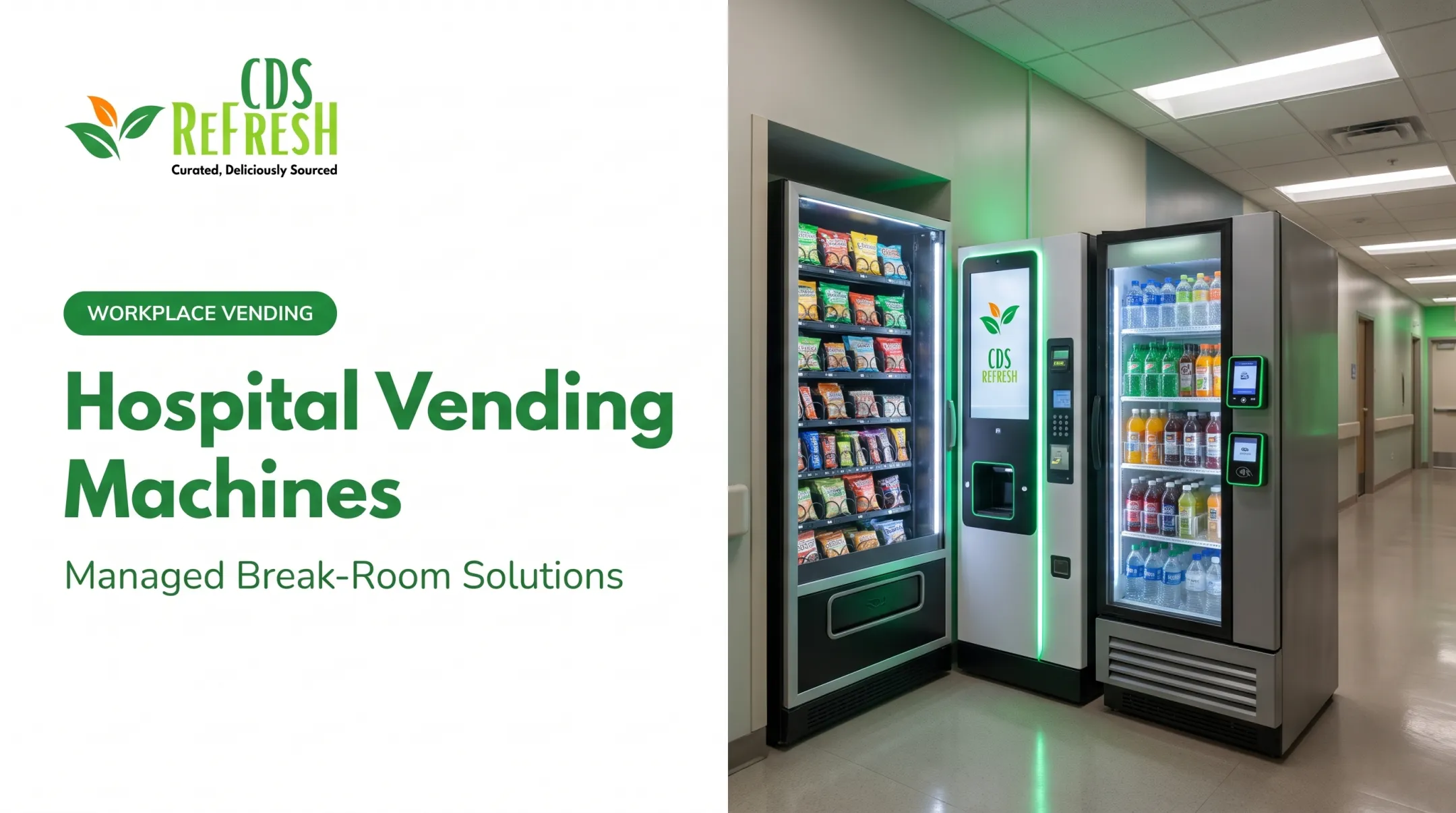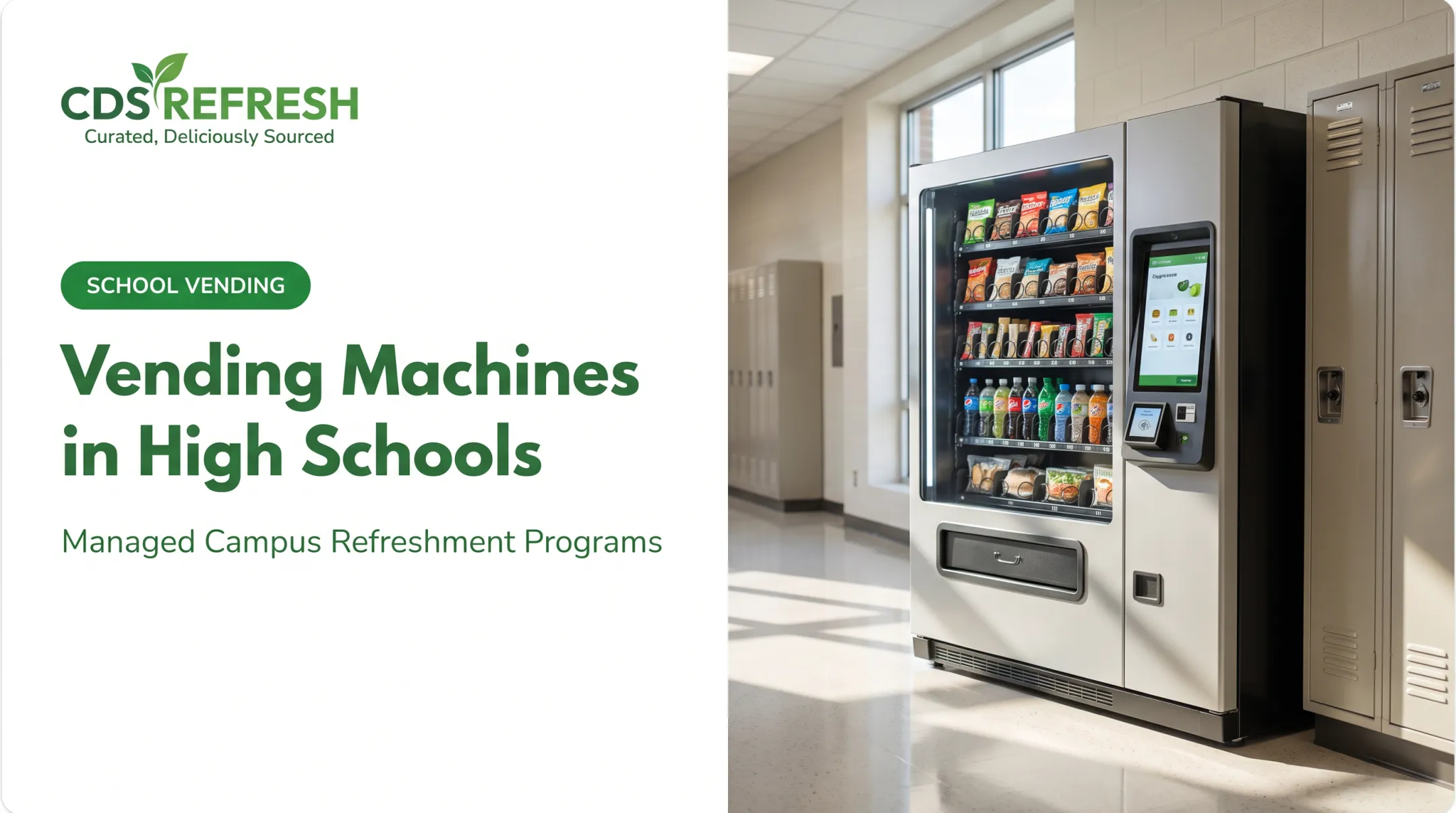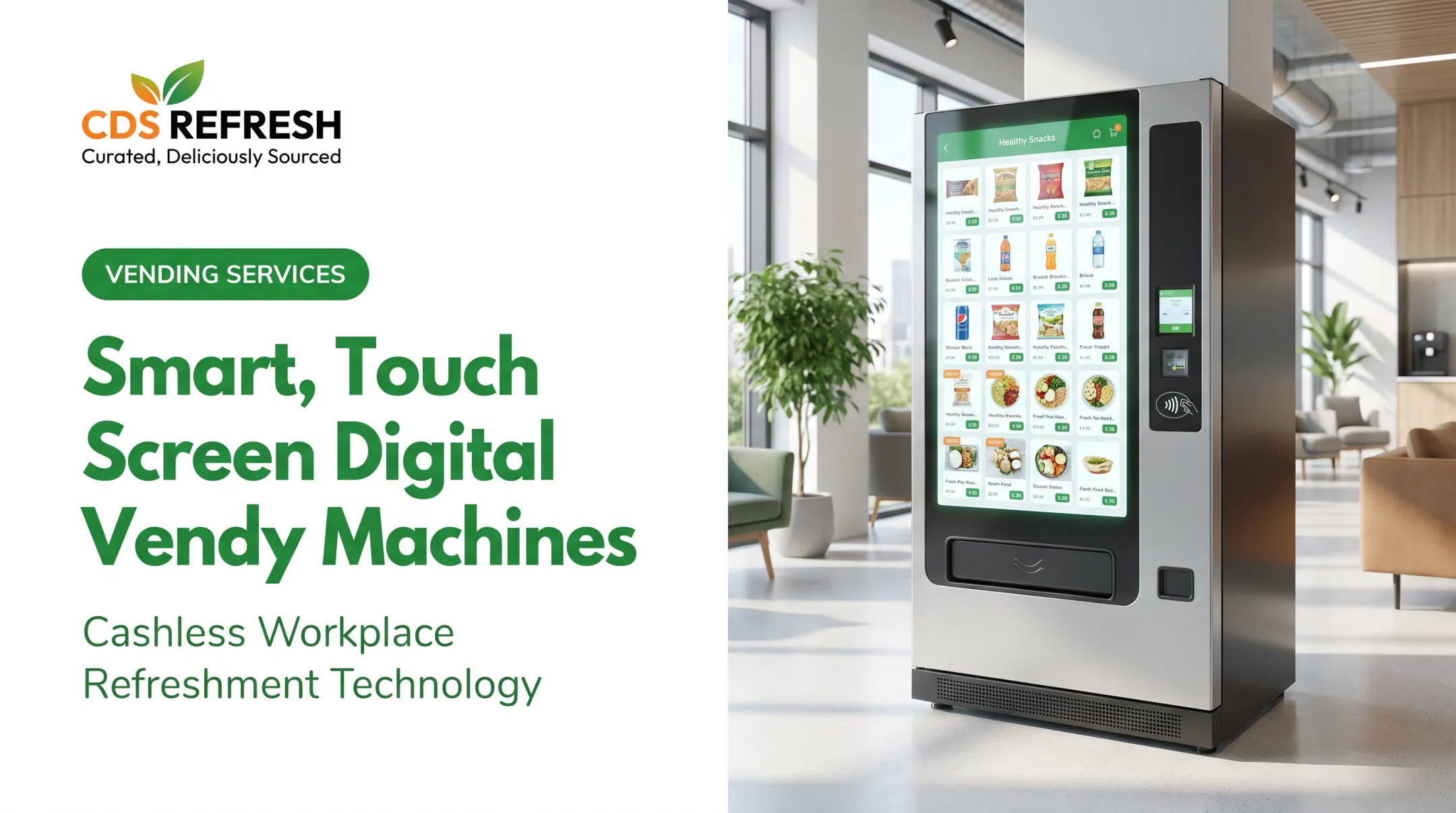

Vending machines at work have quietly evolved from coin-operated candy dispensers into a real piece of workplace infrastructure. Today's setups include cashless payment, healthier snack options, and even AI-enabled smart coolers.
This guide covers the benefits, the different formats available, the technology behind modern machines, and how to pick a vending partner that actually fits your workplace. For DFW-area businesses, veteran-owned providers like CDS Vending offer customized solutions instead of a one-size-fits-all machine.
Key Takeaways
- On-site refreshments cut time lost when employees leave for food and drinks
- Cashless pay, real-time inventory tracking, and healthier mixes define modern workplace vending
- Formats span snack machines, micro-markets, smart coolers, and coffee stations
- The right partner delivers customization, fast service response, and programs that scale
Why Vending Machines at Work Matter for Productivity and Culture
Hunger affects more than your stomach. A 2023 nutrition and cognitive health review shows diet quality can influence memory and mental sharpness through gut-brain signaling involving immune, hormonal, and neural pathways. That finding does not prove a vending machine makes anyone sharper. It does support a simple idea: employees who can't easily access food work at a disadvantage. Breaks matter too, and not everyone takes them. A representative German workforce survey of nearly 6,000 full-time employees found 29% often skipped breaks entirely, while 16% dealt with regular interruptions during them, both patterns tied to worse health outcomes according to a 2023 workplace break study.
Beyond Nutrition: Culture and Retention
On-site refreshments do more than feed people:
- Reduce off-site trips that eat into the workday
- Create informal gathering points where coworkers actually talk to each other
- Signal investment in employee wellbeing, which matters for recruiting SHRM data backs this up: employers offering snacks and beverages jumped from 20% in 2014 to 32% in 2018 according to SHRM's benefits research. Nearly half of professionals surveyed said free food would strongly influence whether they'd take a job. But bad vending backfires. A university study found that more than 81% of users wanted healthier options, with hunger and lack of time cited as the main reasons people used vending in the first place according to a 2021 vending consumption study. Limited variety and stale snacks don't just disappoint. They push people to leave the building anyway, defeating the purpose entirely. CDS Vending's founder Carl Shepherd puts it simply: "Food is a psychology." Thoughtful break-room programs aren't a perk bolted onto company culture. They help build it.
Types of Vending Machines Available for Workplaces
Not every workplace needs the same setup. Here's a breakdown of what's out there:
- Traditional snack/beverage machines — coin, bill, or cashless-operated units stocked with chips, candy, and sodas
- Refrigerated/combo machines — add perishables like sandwiches, salads, and dairy alongside standard snacks
- Micro-markets — open-shelf, self-checkout setups offering far wider variety, including fresh food
- Smart coolers — compact, glass-front units with integrated payment and pay-for-what-you-take purchasing
- Coffee and beverage stations — single-serve or bulk-brew machines featuring name brands
- Specialty machines — sugar-free, gluten-free, or dairy-free selections for dietary accommodations

The line between these categories keeps getting blurrier as technology advances. NAMA's industry census notes that traditional vending, smart coolers, and micro-markets increasingly overlap in features rather than staying in separate lanes.
CDS Vending installs and manages most of these formats, including AI-enabled smart coolers with glass doors, digital purchasing interfaces, and built-in card readers. Clients can start with basic vending and expand into micro-markets or coffee service as needs grow.
What's Actually Selling: Popular Products in Workplace Vending
Snacks and beverages still dominate vending sales. But the mix inside those categories is shifting.
What sells most in workplace vending? The top categories are consistently:
- Bottled water
- Chips and salty snacks
- Chocolate and candy
A 2021 university vending study confirmed water, chocolate, and chips as the most frequently purchased items. Price point and convenience drive volume: these are grab-and-go items people don't think twice about.
Healthier options are gaining ground too. NAMA's most recent industry census found 65% of operators report client requests for healthier product mixes, and 59% view better-for-you snacks as a growth opportunity.

Preferences Vary by Workplace
A warehouse floor and a corporate office don't necessarily want the same vending lineup. Physically demanding jobs may lean toward energy drinks and protein-forward snacks, while office environments often skew toward lighter, healthier grab-and-go items.
CDS Vending's "no purchasing restrictions" approach means clients aren't locked into a fixed menu. Product mixes get assessed and adjusted based on space, employee preferences, and dietary needs — not a generic template applied to every account.
Smart Vending Technology: What Modern Machines Offer
Cash is fading fast from vending. 71% of vending sales were cashless in 2024, with tap-to-pay making up 77% of those cashless transactions according to Cantaloupe's 2025 Micropayment Trends Report. Micro-markets hit 96% cashless, and Smart Stores reached 100%.
Modern machines typically offer:
- Cashless and contactless payment via Apple Pay, Google Wallet, and card readers
- Real-time inventory monitoring that flags low stock before machines run empty
- Remote maintenance alerts that catch malfunctions before extended downtime
- Data-driven restocking that keeps popular items stocked while cutting waste on slow movers
Spending also shifts with the format. Consumers spent almost 27% more per transaction at micro-markets and 101% more at Smart Stores compared to traditional vending, per Cantaloupe's data — likely reflecting the wider selection and fresher food available in those formats.

CDS Vending applies this technology through AI-enabled smart coolers with integrated payment readers and digital purchasing interfaces. The company also maintains a fully stocked warehouse of replacement equipment, so a malfunctioning machine can be swapped out while the original gets repaired — minimizing the disruption a broken machine causes to daily operations.
Which Workplaces Benefit Most from On-Site Vending
Some workplaces feel the lack of on-site food more than others.
The biggest gains show up in:
- Offices and corporate campuses: Short lunch windows and back-to-back meetings make on-site access a baseline benefit, not a perk.
- Logistics, warehouse, and supply chain sites: Multi-shift schedules mean someone is always working when nearby restaurants are closed, and physical work needs steady refueling.
- Schools and government or military facilities: Round-the-clock access matters when standard business hours do not apply.
Wright-Patterson Air Force Base added 24-hour micro-markets for Airmen and civilians on unusual schedules. Fort Leavenworth opened a 24-hour market for nearly 300 soldiers in barracks housing.
CDS Vending serves all three categories across the DFW Metroplex and Abilene, including accounts near Dyess Air Force Base, where consistent 24/7 access is not optional.
How to Choose the Right Vending Partner for Your Workplace
The right partner shapes how well your break room actually works day to day. Prioritize these four traits:
- Customization over fixed menus: Providers who assess your space and workforce beat anyone dropping in a standard package
- Responsive service: Fast troubleshooting and maintenance keep machines from sitting empty or broken for days
- Full-service scalability: Vending, micro-markets, coffee, water, and pantry under one roof means you expand without switching vendors
- Local market knowledge: A provider with deep regional roots responds faster than a national call center

CDS Vending meets these standards with over 25 years serving the DFW Metroplex, veteran and minority ownership, and a no-purchasing-restrictions approach that puts your needs ahead of a pre-set catalog.
A free site assessment and consultation comes first—so recommendations fit your workplace before any equipment goes in.
Frequently Asked Questions
What are the different types of workplace vending?
The main formats include traditional snack/beverage machines, refrigerated/combo units, micro-markets, smart coolers, and office coffee stations. Each fits different workplace sizes and needs.
What are the best-selling items in vending machines?
Bottled water, chips, and chocolate/candy remain the top sellers across most workplaces. Healthier options are gaining ground but haven't overtaken these convenience staples yet.
Do employees have to pay for vending machines to be installed at their workplace?
No. Vending providers typically install and maintain equipment as part of their service agreement with the employer. Specific commercial terms vary by provider, so confirm details directly.
How often are vending machines restocked?
Restocking frequency depends on usage volume, product type, and real-time inventory data rather than a fixed schedule. High-traffic locations naturally get restocked more often than low-traffic ones.
Can vending machines accommodate dietary restrictions like gluten-free or dairy-free?
Yes. Providers like CDS Vending can include sugar-free, gluten-free, and dairy-free options based on workplace preferences identified during an initial assessment.
What's the difference between a vending machine and a micro-market?
A vending machine dispenses selected items through an enclosed mechanism. A micro-market is an open self-checkout setup where employees browse shelves and coolers directly, like a small convenience store.