
Common pain points include:
- Limited square footage that forces hard choices about furniture
- Tight budgets that rule out full renovations
- One room expected to handle eating, relaxing, and socializing at once
Research on workplace micro-breaks shows short pauses meaningfully boost employee vigor and reduce fatigue, even if they don't guarantee a measurable productivity spike (PLOS ONE meta-analysis). In other words, a good break room still matters. This guide covers layout, furniture, refreshment stations, decor, and small teacher lounges specifically.
Key Takeaways
- Zoning and multi-functional furniture fix most small break room space limits
- Compact refreshment stations boost satisfaction without eating floor space
- Budget decor—plants, color, photo walls—lifts mood without a renovation
- Teacher lounges gain the same wins when layouts favor fast turnarounds
Smart Layout and Zoning for Small Staff Rooms
A cluttered break room feels smaller than it is. The fix is defining zones, not adding more furniture. Even in 100 square feet, you can carve out a dining spot, a quick-break counter, and a small relaxation corner without them colliding.
Prioritize a few essential pieces instead of cramming in everything:
- One small table (round tables use corners better than square ones)
- Two to four chairs, mixed with a compact bench or loveseat
- A single multi-purpose counter for coffee, water, and the microwave
Keep high-traffic amenities like the coffee maker, water dispenser, and microwave centralized near the entrance. This reduces congestion when three people want coffee at the same time and someone else just wants to grab water and leave.
Wall-mounted or fold-down tables and stackable chairs reclaim floor space when the room sits empty between breaks. That flexibility matters: people skip breaks when the room feels too tight to bother, and a usable layout is what keeps them coming back.

Layout Tips for Different Small Spaces
A closet-sized nook (think 40-60 square feet) works best with a single bench seat and a mini fridge tucked underneath a shelf. Skip the table entirely. A narrow wall ledge handles coffee cups fine.
A slightly larger shared room, say 100-150 square feet, can support a small round table paired with one lounge chair in the corner. The round table keeps traffic flowing; the lounge chair gives at least one person a quiet spot away from conversation.
Space-Saving Furniture and Seating Ideas
Furniture choice makes or breaks a small staff room. Multi-purpose pieces do double duty:
- Banquette seating with storage underneath (great for holding extra paper goods)
- Stools that tuck completely under counters when not in use
- Nesting or stacking tables that expand for team meetings, then collapse
Mix seating heights to support different break styles. High stools near the counter suit a five-minute coffee break. Low armchairs in a corner give someone space to sit down and decompress for fifteen minutes.
For storage, go vertical:
- Wall shelves for mugs and snacks
- A slim wall organizer for notices, mail, or tablets
- A compact bookshelf if the room doubles as a reading nook
Upholstery takes more wear than most office furniture. Staff rooms see constant use — spilled coffee, dropped lunches — so easy-to-clean fabric or vinyl beats delicate textiles every time.
Stackable and foldable pieces let the same room flex for occasional team meetings or after-hours events without a second dedicated space.

Coffee, Snacks and Refreshment Stations That Fit Small Spaces
A well-stocked beverage and snack station makes a real difference without eating much floor space. Options scale from simple to sophisticated:
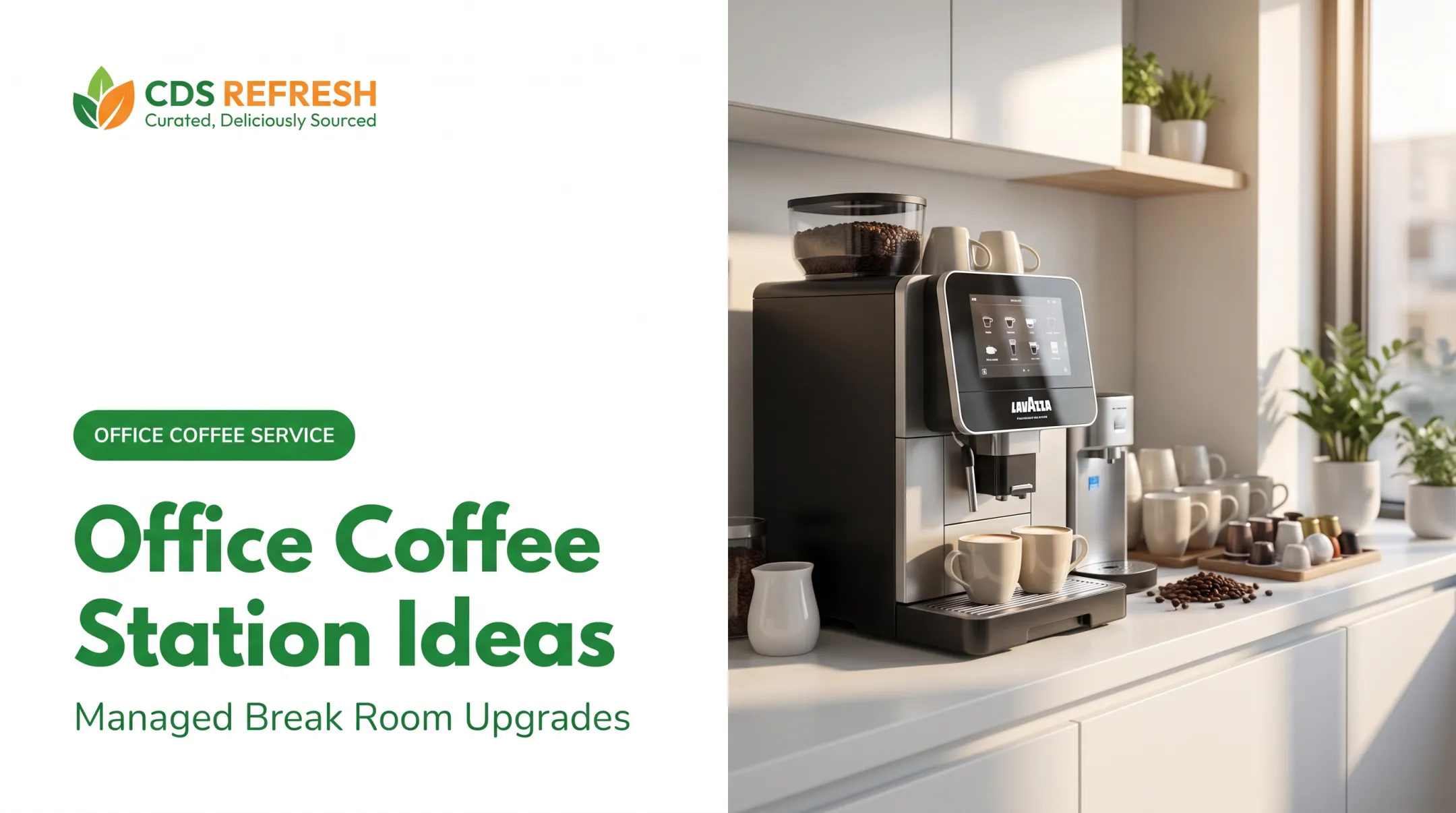
- A compact coffee bar with a single-serve machine
- A small countertop setup with tea, cold brew, and filtered water
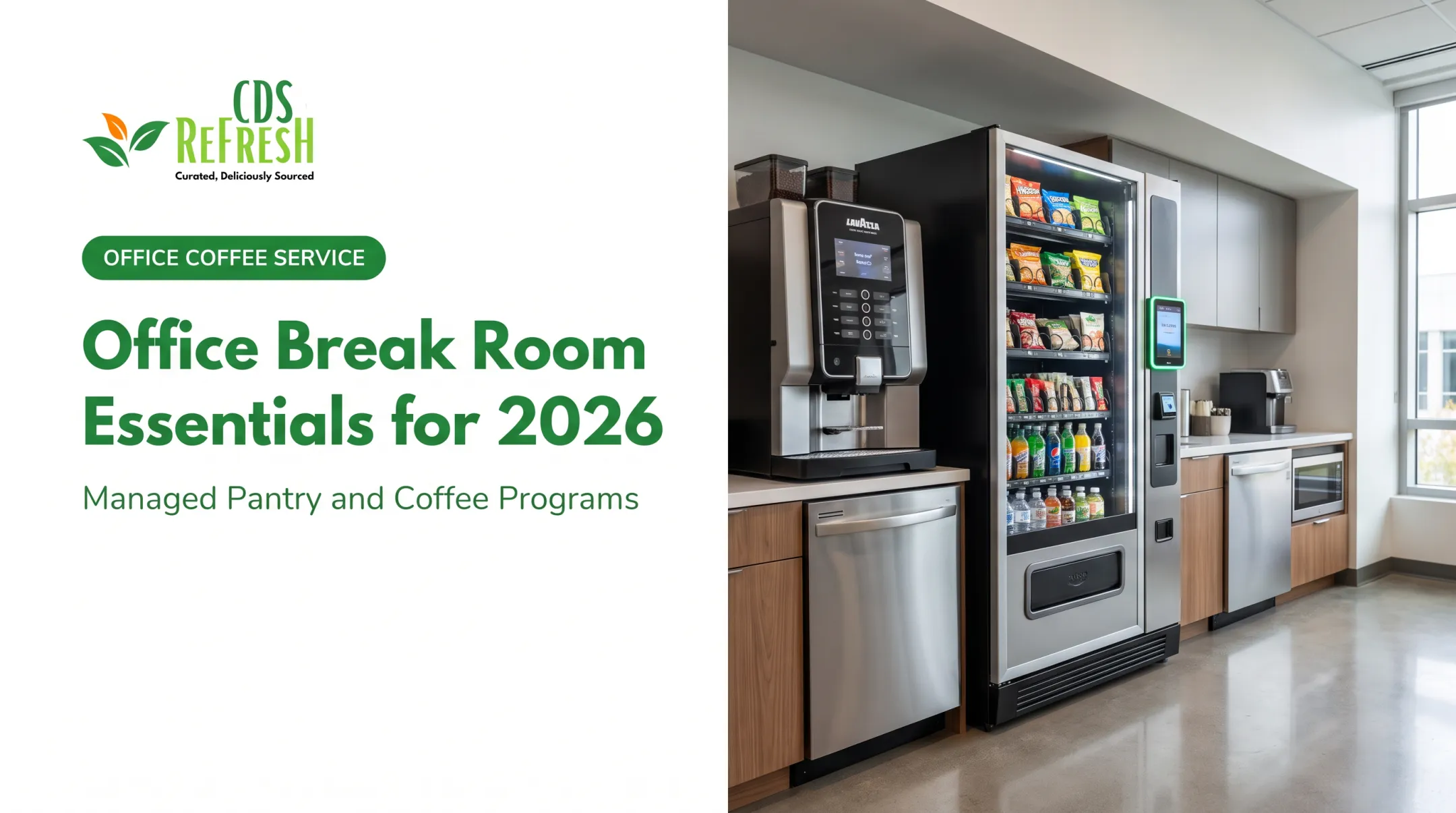
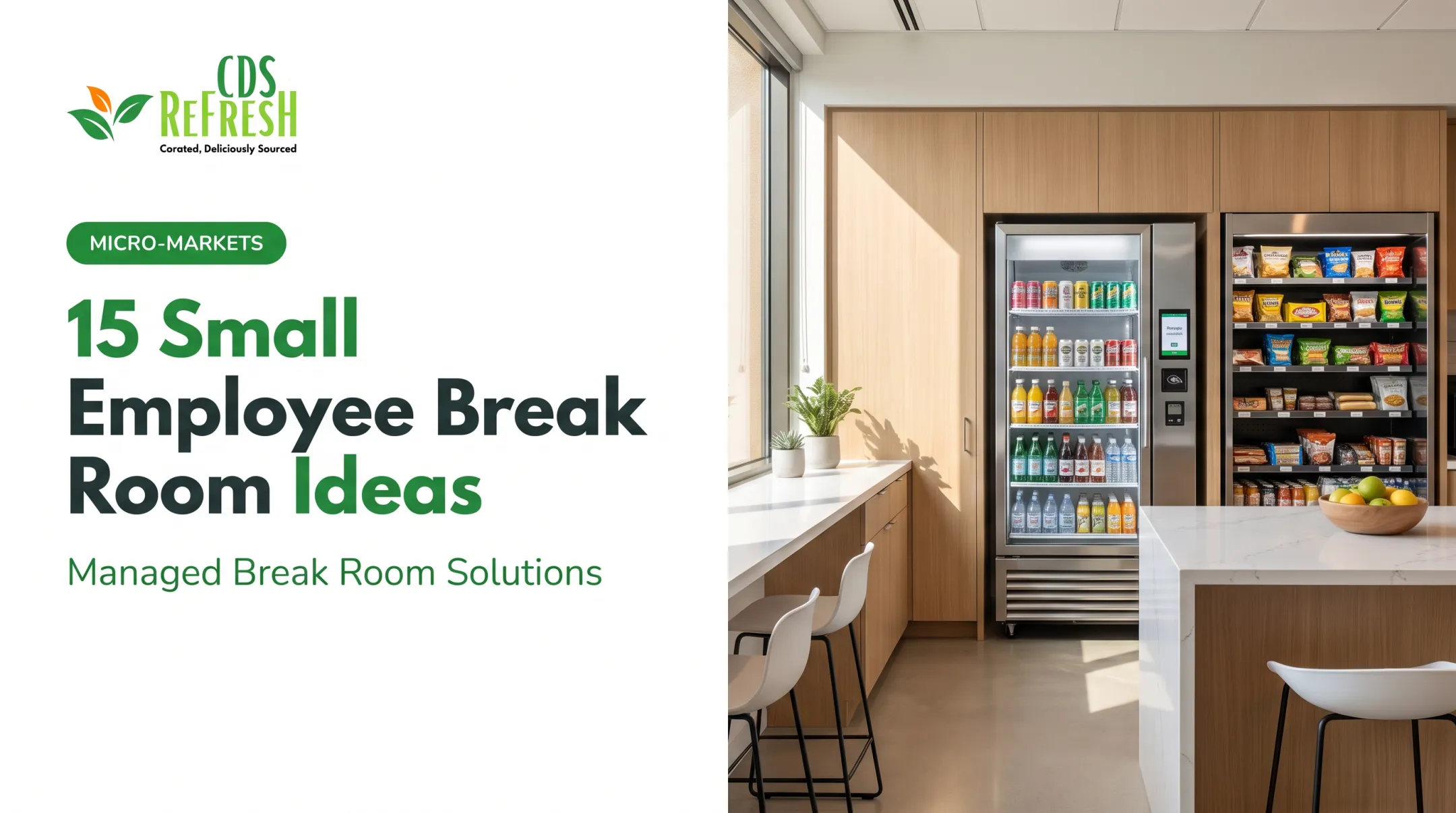
- A micro-market or smart cooler for fresh food without a kitchen buildout Micro-markets and AI-enabled smart coolers work especially well in tight footprints. CDS Refresh, a workplace refreshment provider serving the DFW Metroplex and Abilene, Texas, builds micro-markets around a client's available space and workplace culture using a custom planogram, rather than a one-size-fits-all setup. Their smart coolers are portable and compact by design, with a glass door and integrated cashless payment. That makes them a realistic fit for a break room that can't take a full-sized kitchen. Even in a small selection, offer dietary-inclusive options:
- Sugar-free and low-sugar snacks
- Gluten-free choices
- Dairy-free beverages and snacks CDS Refresh operates with no purchasing restrictions, so the product mix is built around employee preferences and available space rather than a fixed brand list. Cashless payment options like Apple Pay, Google Wallet, and card readers speed up transactions and remove the clutter of a cash box or coin jar. That's one less thing taking up counter space in a room where every inch counts.

Budget-Friendly Decor and Ambiance Ideas
Small staff rooms benefit from thoughtful color choices. Calming blues and greens, or warm neutrals, can make a tight space feel more open and less stressful.
A systematic review of workplace color research found green consistently linked to relaxed, positive emotional responses. Effects vary by person, so treat color as a starting point, not a formula.
Quick wins that don't eat floor space:
- A few low-maintenance plants (pothos and snake plants tolerate neglect well)
- Warmer, daylight-mimicking bulbs instead of harsh fluorescent lighting
- A photo wall or rotating bulletin board for team shout-outs

None of these require construction. They just require someone to actually do them.
Small Teacher Lounge Ideas
Teacher lounges face the same space constraints as any staff room, but with a twist: turnarounds are fast, often just a single class period. RAND's 2025 State of the American Teacher report found teachers average 49 work hours per week, 10 hours above their contracted time. The NEA reports 57% experience burnout. A usable lounge, even a small one, matters. Low-cost, low-footprint ideas built for quick breaks:
- A book swap shelf near the door
- A mindfulness coloring station on a side table
- A shared puzzle table that stays in progress between periods
- A staff birthday or shout-out display
- A small self-care corner with a comfortable chair, away from the main traffic flow These ideas don't require extra square footage. They require intention, plus administrators willing to protect the few minutes teachers actually have.
Frequently Asked Questions
What makes a good staff room?
A good staff room balances comfort, function, and personality. It gives people a place to eat, relax, and recharge—with comfortable seating, simple refreshments, and no clutter.
What are some ideas for a small teacher lounge?
Quick wins: a book swap corner, a mindfulness coloring station, a staff shout-out board, and a compact coffee or tea setup sized for short breaks between classes.
How much space is actually needed for a small break room?
Even a closet-sized nook works if it includes seating, a small table, and basic refreshment access. Prioritize function over square footage.
What is the cheapest way to upgrade a small staff room?
Paint, plants, secondhand furniture, and a simple bulletin board freshen the room fast—no renovation budget required.
How can a small break room still offer good food and coffee options?
Compact micro-markets, smart coolers, and single-serve coffee stations let even the smallest rooms offer real variety without needing a full kitchen buildout.
Should a small staff room have a designated quiet zone?
Yes. Even in tight spaces, one quiet corner with soft seating gives employees a place to mentally reset, separate from louder social areas.