
Many businesses struggle to give employees a real break room when square footage is tight. Yet the pressure to create a space that supports focus, morale, and retention hasn't gone away. Research on break behavior shows that even brief, voluntary recovery time increases vigor and reduces fatigue among employees. A well-known workplace study also found that synchronized coffee breaks strengthened social connections among coworkers, which tracked with better productivity outcomes in a large-scale bank study.
This article covers 15 practical, budget-conscious break room ideas organized by theme: refreshments, layout, decor, and engagement. None require a construction crew or a five-figure budget.
Key Takeaways
- Small break rooms can rival larger ones when multi-functional furniture and deliberate layout maximize every square foot
- Free beverages and easy refreshments rank among top employee wants and lift day-to-day satisfaction
- Layout, lighting, and color matter as much as square footage
- Low-cost engagement features build connection without eating up floor space
- A managed vending or micro-market partner removes the stocking and maintenance burden entirely
Ideas 1-5: Refreshment & Food Station Ideas
Food and drink anchor every break room. A commercial workplace survey found 55% of respondents valued free beverages, compared to 16% who prioritized free food, according to a Peapod workplace survey. Start here before expanding your budget elsewhere.
Idea 1: Compact Coffee & Tea Bar
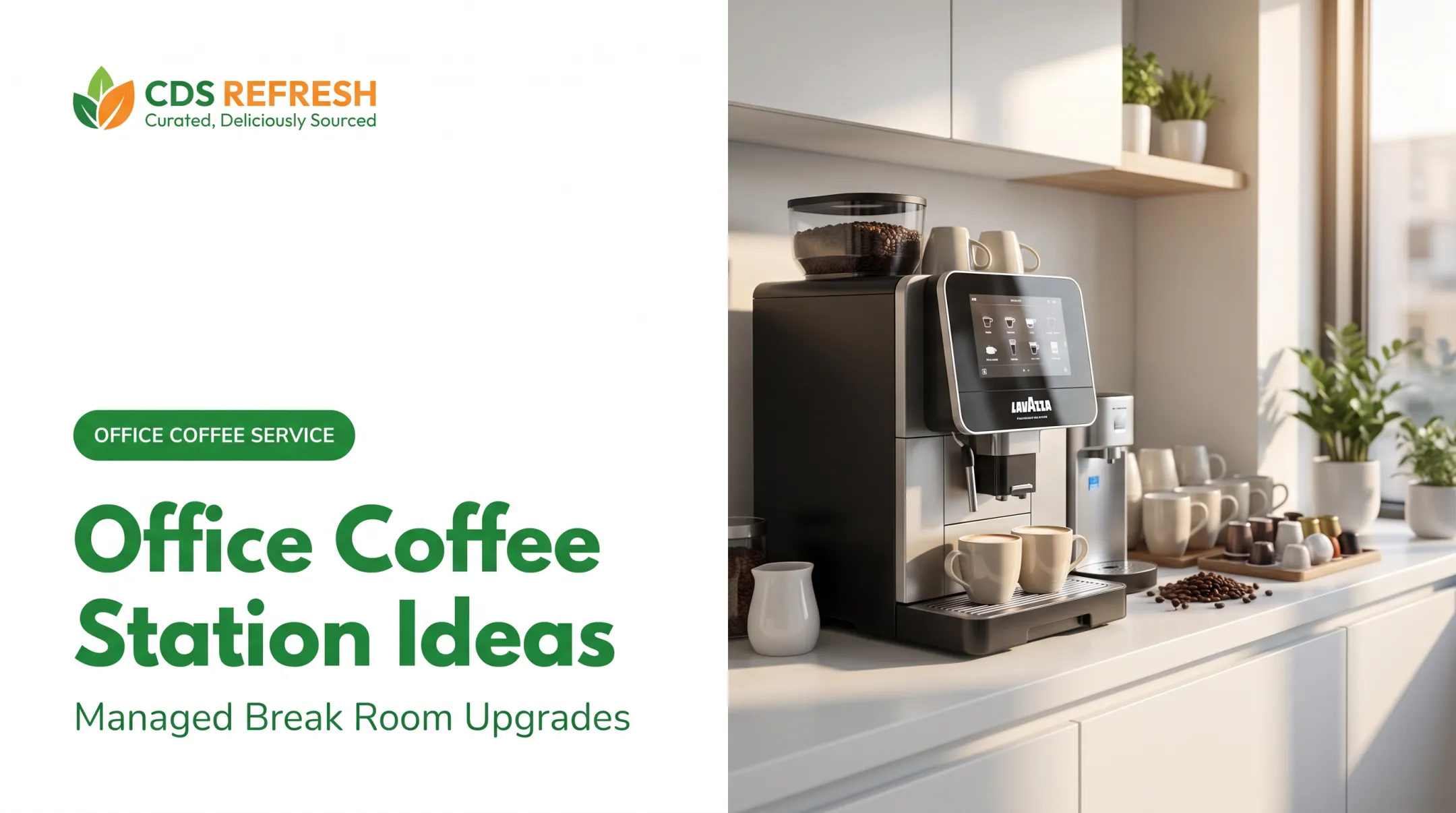
A single-surface coffee and tea bar—quality machine, syrups, and real mugs—lifts morale without eating floor space. CDS Refresh installs compact systems from Lavazza, Flavia, and Cafection, with brands like Starbucks, Peet's, and Pelican Rouge. Fair Trade options and compostable cups are easy add-ons for teams that care about sustainability.
Idea 2: Vending Machine or Smart Cooler
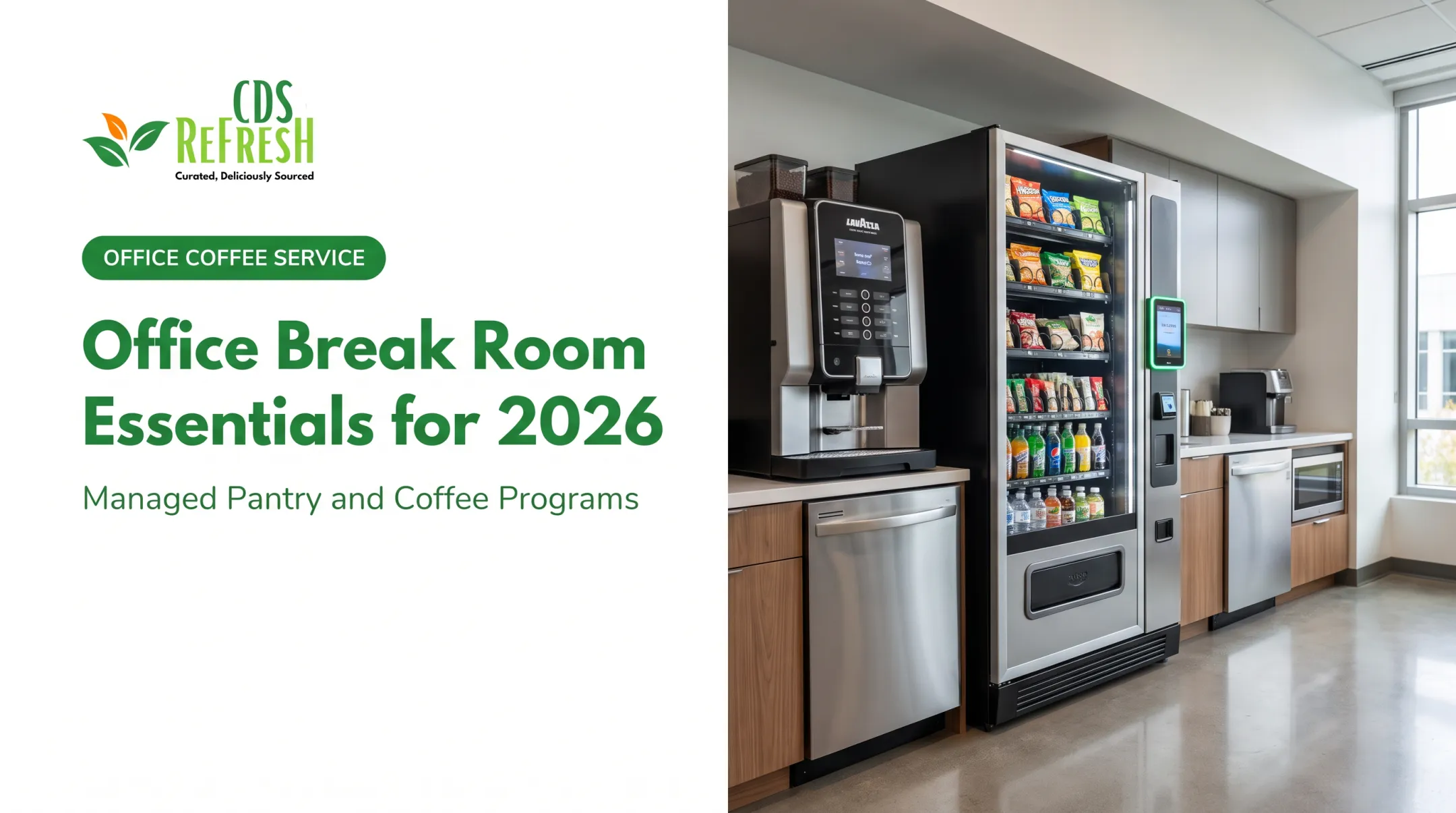
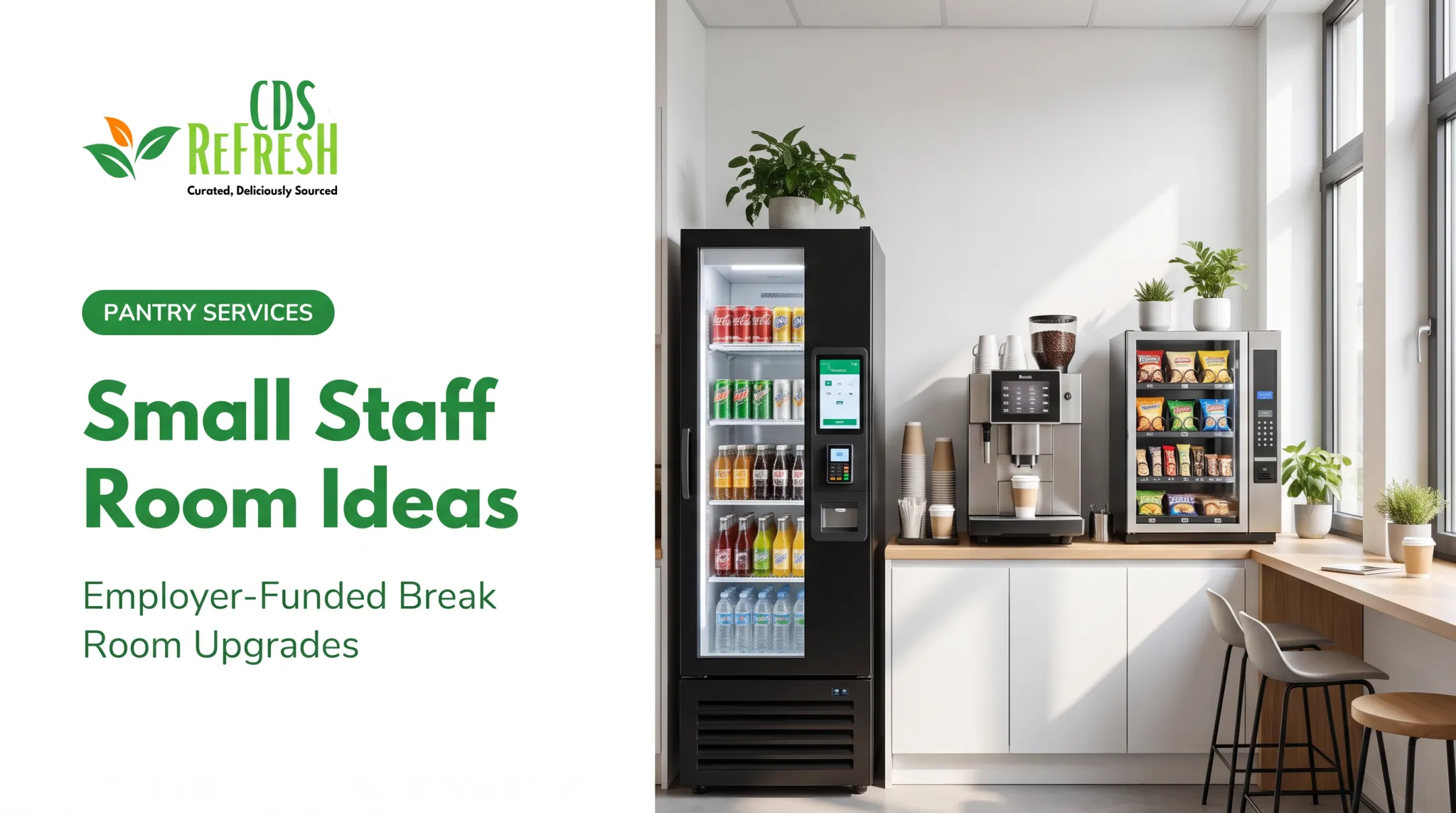
Tight on space? A modern vending machine or AI-enabled smart cooler delivers 24/7 access in a small footprint. CDS Refresh smart coolers are built for compact break rooms:

- Fit where a full vending machine won't
- Glass fronts for quick product browsing
- Cashless payment with a pay-for-what-you-take model
- No purchasing restrictions, so you can stock sugar-free, gluten-free, or dairy-free items
Idea 3: Mini Micro-Market Corner
A scaled-down micro-market with a self-checkout kiosk brings grab-and-go fresh food into a small footprint. These 24/7 unattended setups use a planogram built around your available space, covering refrigerated meals, snacks, and beverages.
Idea 4: Water Filtration Station
A filtered water cooler or bottle-fill station is low-footprint and high-impact. Direct-connect systems dispense hot and cold filtered water without bulky bottled deliveries. Sparkling and mineral options work well for teams that want more than plain tap.
Idea 5: Rotating Healthy Snack Bar
Stock a small shelf with sugar-free, gluten-free, and dairy-free snacks, and rotate weekly. Poll employees before you commit to a full assortment. A managed refreshment partner can then adjust selections based on what actually gets eaten.

Ideas 6-10: Space-Saving Layout & Furniture Ideas
In small break rooms, multi-purpose furniture does the heavy lifting. Federal workplace design guidance favors reusable, easily reconfigured pieces and clear zones for different uses—not stuffing every square foot.
GSA's internal space policy supports that approach. These five layout and furniture moves apply the same idea on a tighter footprint.
Idea 6: Fold-Down or Wall-Mounted Tables
Collapsible or wall-mounted tables free floor space when meals aren't happening. Fold them up after lunch and the room becomes a walkway, standup huddle spot, or stretch zone again.
Idea 7: Stackable and Modular Seating
Stools, ottomans, and stackable chairs shift from solo breaks to group lunches in minutes. Stack extras against a wall so no single layout has to stay permanent.
Idea 8: Vertical Storage & Lockers
Slim lockers and wall shelving hold mugs, snacks, and cleaning supplies without eating floor area. Look up, not out, when square footage runs short.
Idea 9: Built-In Kitchenette Essentials
A mini fridge, microwave, and toaster oven cover the basics without a full commercial kitchen. Where a standard fridge is too deep, CDS Refresh smart coolers and compact coffee equipment keep drinks and snacks available in a smaller footprint.

Idea 10: Natural Light Optimization
Place seating near windows, or add mirrors opposite the brightest wall so the room reads larger. Even borrowed light from a doorway or sidelight helps.
A 2014 case-control study in the Journal of Clinical Sleep Medicine found office workers in windowless spaces reported poorer vitality and sleep scores than peers with more daylight.
Ideas 11-13: Decor & Ambiance Upgrades
Color, lighting, and greenery transform even a tiny break area into a place people actually want to sit.
Idea 11: Calming Wall Colors
Soft blues, greens, and neutral warm tones tend to feel relaxing rather than stimulating, according to workplace color research covered by Forbes' review of color psychology in offices. You don't need to repaint the whole room. An accent wall or removable art panel does the job.
Idea 12: Low-Maintenance Plants
Pothos, snake plants, and succulents add life without much care or floor space:
- Choose hardy varieties that tolerate low light
- Use wall planters or shelf pots to save square footage
- Treat greenery as an appearance upgrade—evidence on productivity gains is mixed
Idea 13: Layered Lighting with LED Strips
Affordable LED strips under cabinets or behind seating add warmth and let people adjust brightness through the day.
- Layer task and ambient light instead of one fixed overhead fixture
- Put brightness in employees' control to cut glare and eye strain

Ideas 14-15: Engagement & Quick-Win Features
Interactive, low-cost additions keep small break rooms lively without needing extra square footage.
Idea 14: Bulletin Board or Community Puzzle
A shared puzzle or a "question of the week" board sparks conversation among employees who don't normally interact. It costs almost nothing and gives people a reason to linger for two extra minutes.
Idea 15: Charging Station & Quiet Corner
Not everyone wants a chat over coffee. A small nook with a comfortable chair, charging ports, and no TV gives employees a place to decompress.
Research on office sound found that above 50 decibels, each 10-decibel increase correlated with lower physiological wellbeing, according to a University of Arizona report on office sound and wellness. A quiet option matters as much as a social one.
Frequently Asked Questions
Are you legally supposed to have a break room?
Federal law doesn't require a dedicated break room, and OSHA doesn't mandate lunchrooms or eating areas. Many states have their own rest and meal break requirements, so check your state's labor department for specifics.
What do employees want in their break room?
Coffee, healthy snacks, comfortable seating, and a genuine change of scenery top most employee wish lists. Free beverages, in particular, rank higher than free food in workplace surveys.
What is the purpose of a break room?
It's a space for employees to recharge, socialize, and step away from their desks. That short mental reset helps people return to work more focused.
What are some creative ideas for a small break room?
Multi-purpose furniture, vertical storage, and compact vending or micro-market solutions all make smart use of limited space. A managed refreshment partner can also customize a pantry or micro-market planogram to your exact footprint.
What color is best for an employee break room?
Calming, neutral tones like soft blue or green tend to feel relaxing rather than stimulating. Add a pop of brand color for personality without overwhelming the space.
Whatever direction you take, start with what employees actually use, not what looks best in a catalog. CDS Refresh works with DFW-area and Abilene businesses to design break room refreshment solutions, from smart coolers to full micro-markets, sized to fit the space you actually have.