
But many buyers still hesitate. Is the water actually clean? Is it safer than what comes from the kitchen faucet? And does "alkaline" or "reverse osmosis" mean anything beyond marketing language?
This guide breaks down how these machines work, what safety oversight actually looks like, and where filtered water fits for homes, retail spaces, and workplaces.
Key Takeaways
- Multi-stage filtration (sediment, carbon, UV, RO) treats municipal tap water for less than bottled water
- Safety depends on regular servicing, state licensing, and third-party checks such as NAMA evaluation
- Alkaline and RO machines solve different problems; neither is objectively better
- Workplaces often choose filtered dispensers and smart coolers over standalone water vending units
How Water Vending Machines Work
Water vending machines don't create water. They treat it. Most units connect directly to an existing municipal water line, run it through a treatment sequence, and dispense it into a container you provide.
The Filtration Sequence
Manufacturer specs vary, but a typical setup includes:
- Sediment filtration: removes visible particles like rust and sand
- Carbon filtration: improves taste and odor, reduces certain chemicals
- Reverse osmosis (RO): strips dissolved minerals and contaminants
- UV sterilization: neutralizes bacteria and pathogens before dispensing
Not every machine includes all four stages. Some skip UV, others skip RO entirely. Always check the equipment label before assuming.
Payment and Dispensing
Machines now accept coins, bills, credit/debit cards, and mobile wallets like Apple Pay. Most dispense in gallon or 5-gallon increments, matching the jugs people already bring from home.
You'll also see two common public formats:
- Indoor kiosks at grocery store entrances
- Outdoor standalone units weatherproofed for gas stations and laundromats
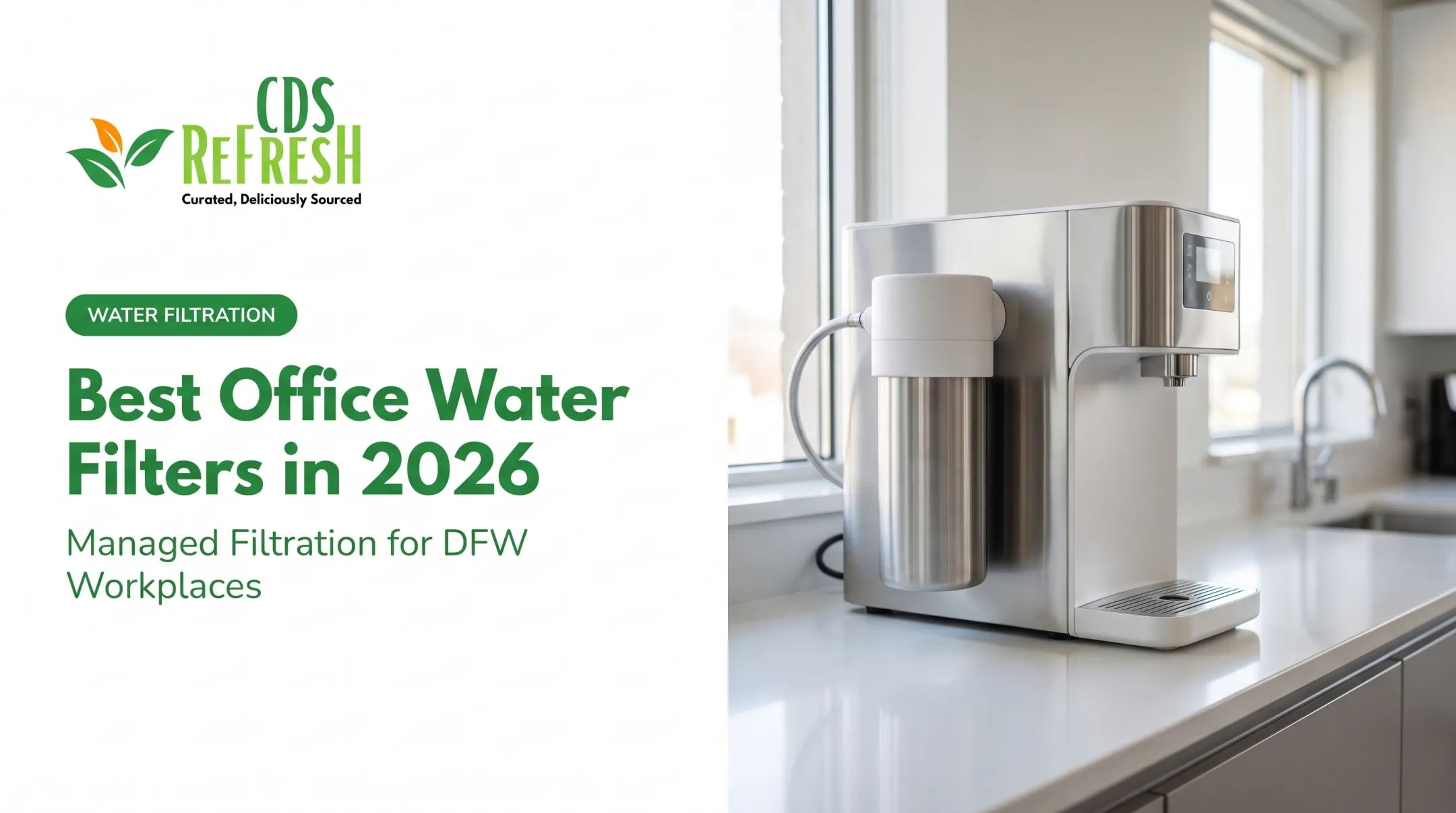
The same treatment logic shows up in workplace direct-connect dispensers, which feed filtered water straight to break-room taps or bottle stations instead of a pay-per-gallon kiosk.
Some newer machines are remotely monitored, tracking gallons dispensed, filter status, and error codes in real time. That visibility helps operators fix maintenance issues before water quality or uptime takes a hit.

Are Water Vending Machines Safe to Drink From?
Here's the honest answer: safety depends on the machine, not just the source water.
The water feeding these units typically comes from municipal supplies regulated under the EPA's Safe Drinking Water Act, which sets standards for over 90 contaminants. That's a solid baseline. But the machine itself, and how well it's maintained, determines what actually reaches your container.
What Regulation Looks Like
States require operators to hold licenses and meet testing schedules. California mandates:
- Annual operator licensing
- Coliform testing at least every six months
- Sanitization every 31 days
- Automatic shutdown if disinfection fails
Texas requires bacteriological testing every 90 days per machine, with immediate shutdown after a coliform-positive result.
Why This Matters
Inspection frequency varies by state, and enforcement isn't always consistent. A 2021 peer-reviewed study in Water Supply tested 25 machines in California's Eastern Coachella Valley. The results were unsettling:
- Total coliforms in 32% of machines
- Pathogens including Listeria and Salmonella detected in 81% (via qPCR, a DNA-based lab method)
- No residual chlorine in 40% of units
That's one regional sample, not a national verdict. But it's a clear reminder that a machine sitting outside a gas station isn't automatically safe just because it looks new.
Look for these before trusting a machine:
- A visible license or permit sticker with current dates
- A recent service date posted on the unit
- Clean spout with no visible buildup or grime
- NAMA Service Mark, indicating the equipment passed sanitary design evaluation

Practical Safety Tips
- Use a clean, dedicated container every time
- Avoid touching the dispensing spout with hands or containers
- Refrigerate water promptly after filling
- Check for posted signage about testing dates or violations
Types of Filtered Water: Alkaline, RO, and Standard Purified
Not all filtered water serves the same purpose. Here's how the three main types compare.
Alkaline Water
Alkaline machines raise water's pH through ionization or added minerals. The pitch: better hydration, reduced acidity, health benefits.
The evidence doesn't fully back that up. Mayo Clinic notes that alkaline water isn't proven better than plain water for most people, and flags concern above pH 9.8, particularly for anyone with kidney issues. A 2022 systematic review found no significant health differences compared to mineral water.
For most buyers, alkaline is a taste preference—not a proven health upgrade.
Reverse Osmosis (RO)
RO pushes water through a membrane that removes dissolved minerals like calcium and magnesium, along with many contaminants. It's the gold standard for purity but strips out minerals your body normally gets from water too.
People who eat a reasonably balanced diet get minerals from food, not drinking water. Daily RO water is generally fine—just don't treat it as a mineral source.
Standard Purified (Multi-Stage)
Standard multi-stage systems typically combine sediment, carbon, and polishing filters. They reduce chlorine, particulates, and many common contaminants while keeping naturally occurring minerals that affect taste.
This is the workhorse option in most water vending machines: clean, neutral-tasting water at the lowest cost per gallon.
Side-by-Side Comparison
| Type | Purpose | Taste | Cost per Gallon |
|---|---|---|---|
| Standard multi-stage | Everyday purified water | Neutral, clean | $0.25-$0.50 |
| RO | Maximum contaminant removal | Very clean, "flat" | $0.75-$1.00 |
| Alkaline | Higher pH, taste preference | Slightly smoother | Varies by machine |

On commercial vending equipment, cost per gallon and upkeep track the filtration path you choose. RO and alkaline setups usually need more frequent filter or membrane service than standard multi-stage systems, and installation or plumbing work adds to the total beyond the sticker price.
Cost, Value, and Where Water Vending Fits Best
The math on vending machines looks appealing at first glance, then gets more complicated.
Price Per Gallon Breakdown
- Water vending machines: roughly $0.30-$0.50 per gallon in most markets
- Bottled water: about $1 per 16.9-oz bottle, which works out to over $7 per gallon
- Municipal tap water: around $0.0077 per gallon residential rate nationally Vending clearly beats bottled water on price. It doesn't beat tap water, but it offers filtration and convenience tap water can't match, especially in areas with aging pipes or inconsistent taste.
Where It Makes Sense
Vending machines work best in high-traffic locations:
- Grocery stores and convenience stores
- Laundromats and RV parks
- Fitness centers and apartment complexes For a single household filling one jug a week, the economics are weak. The convenience doesn't offset the trip.
The Workplace Angle
Offices face a different calculation entirely. Employees don't want to haul jugs to a vending machine between meetings. That's where filtered dispensing systems built directly into the break room change the equation. CDS Refresh has served DFW-area workplaces since 1999 with direct-connect water filtration for the break room. Systems tie into the existing water line and dispense hot and cold filtered water on demand—sparkling and mineral options included. Workplace filtration advantages:
- No jug hauling or trips to a standalone machine
- Hot, cold, sparkling, and mineral water from one dispenser
- Installation and ongoing service handled on-site CDS Refresh also offers AI-enabled smart coolers as a separate service for bottled beverages and grab-and-go items. Water filtration and smart coolers are distinct units; one provider can install and maintain both, which cuts coordination overhead for facilities teams.

How to Choose a Reliable Water Vending or Filtration Solution
Whether you're evaluating a standalone vending machine or a workplace filtration system, the same core questions apply.
Check for these before committing:
- NAMA certification or equivalent third-party sanitary design evaluation
- A visible license and recent service date (for public vending units)
- Transparent water quality testing results, not just marketing claims
- A reputable operator with a track record, not just a manufacturer name on the box
Maintenance Frequency Matters More Than Specs
A machine with perfect filtration specs is only as good as its last service visit. Ask potential providers:
- How often is the equipment serviced?
- Is there remote monitoring to catch issues early?
- What happens if a filter fails between scheduled visits?
Machines serviced infrequently are far more likely to rack up violations, as the state testing data shows.
Why Downtime Risk Matters for Businesses
For workplaces, an unmanaged standalone unit means somebody internally has to notice when something's wrong. That's rarely anyone's job.
A managed provider closes that gap. CDS Refresh draws on founder Carl Shepherd's military logistics and supply-chain background, with a warehouse and full-service machine shop that stocks replacement equipment.
When a unit needs repair, technicians troubleshoot on-site and can install a swap immediately—so the break room isn't without water for days. That quick-turnaround response is harder to get from an unmanaged vending unit with no dedicated service relationship.
Frequently Asked Questions
How much does an alkaline water machine cost?
Commercial water vending machines typically run several thousand dollars, depending on filtration stages, tank capacity, and payment hardware. Workplace dispensers usually cost less. Factor in filters, installation, and ongoing maintenance when comparing options.
Are filtered water dispensers worth it?
Yes, for high-traffic workplaces where convenience and less bottled plastic matter. At low-volume sites, bottled water or a simpler dispenser often delivers better value than a full vending setup.
What is the best filtered water machine?
It depends on your goal. RO delivers maximum purity by removing dissolved contaminants, while multi-stage carbon/UV systems suit everyday taste and cost. Always check for NAMA certification regardless of type.
Is it healthy to drink reverse osmosis water?
Yes, for most people. RO removes beneficial minerals along with contaminants, but a balanced diet typically compensates for that loss without needing supplements.
Do alkaline water machines really work?
They do raise water's pH as advertised. What's limited is scientific evidence for meaningful health benefits beyond personal taste preference, according to Mayo Clinic and systematic reviews.
Is it safe to drink alkaline water daily?
Generally yes for healthy adults. Anyone with kidney conditions or other specific health concerns should check with a doctor first, since very high-pH water can affect mineral balance in the body.