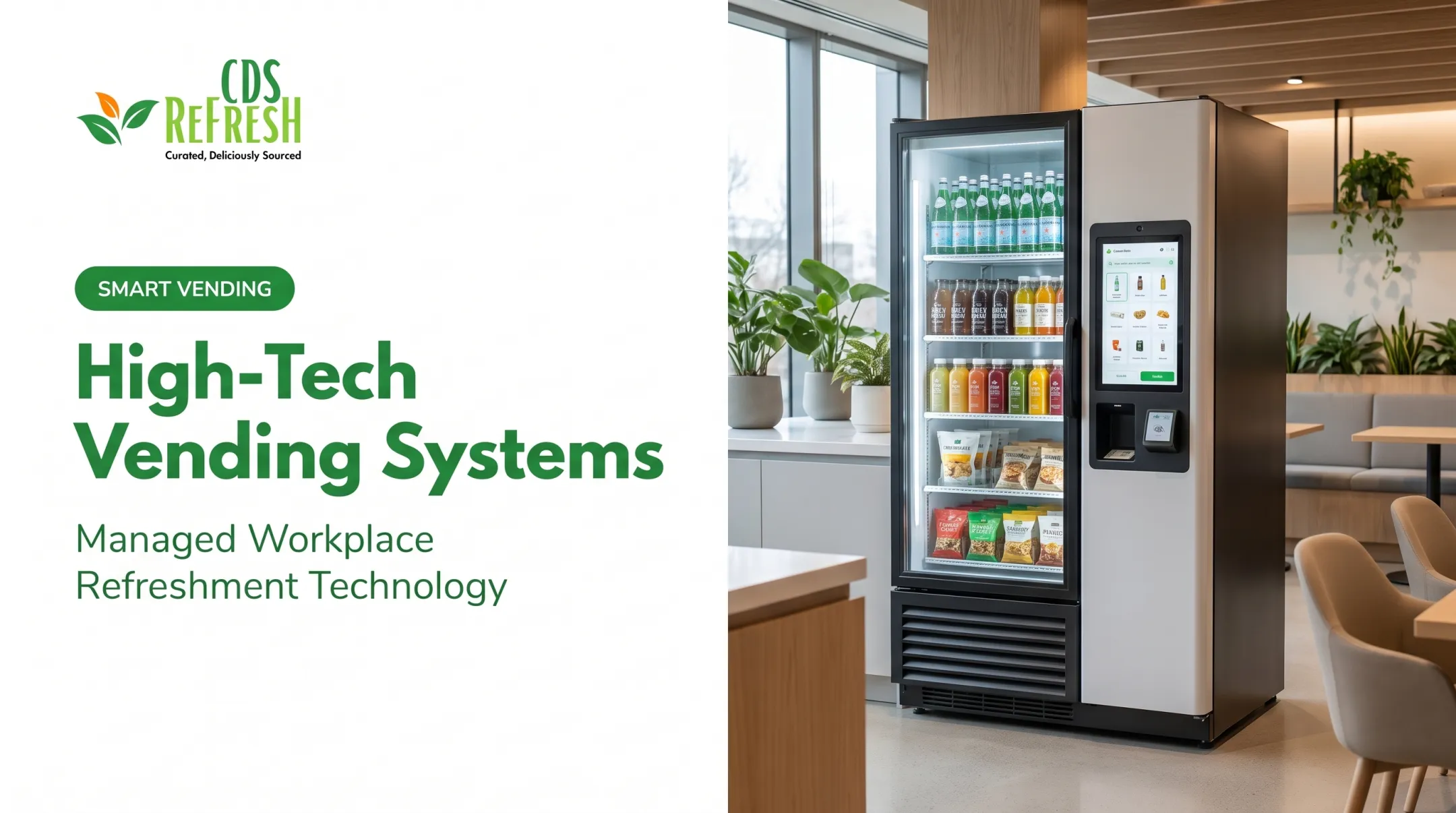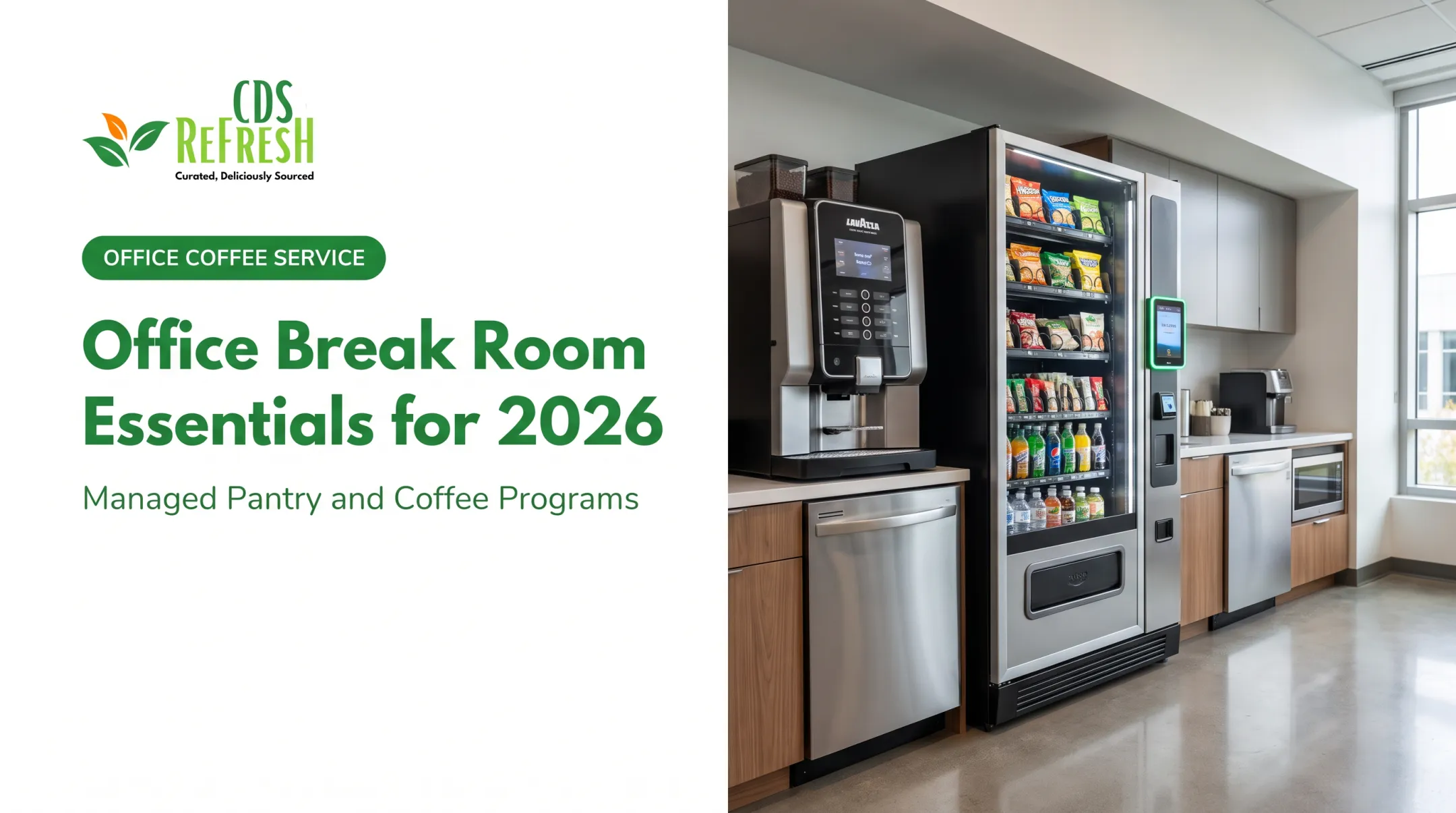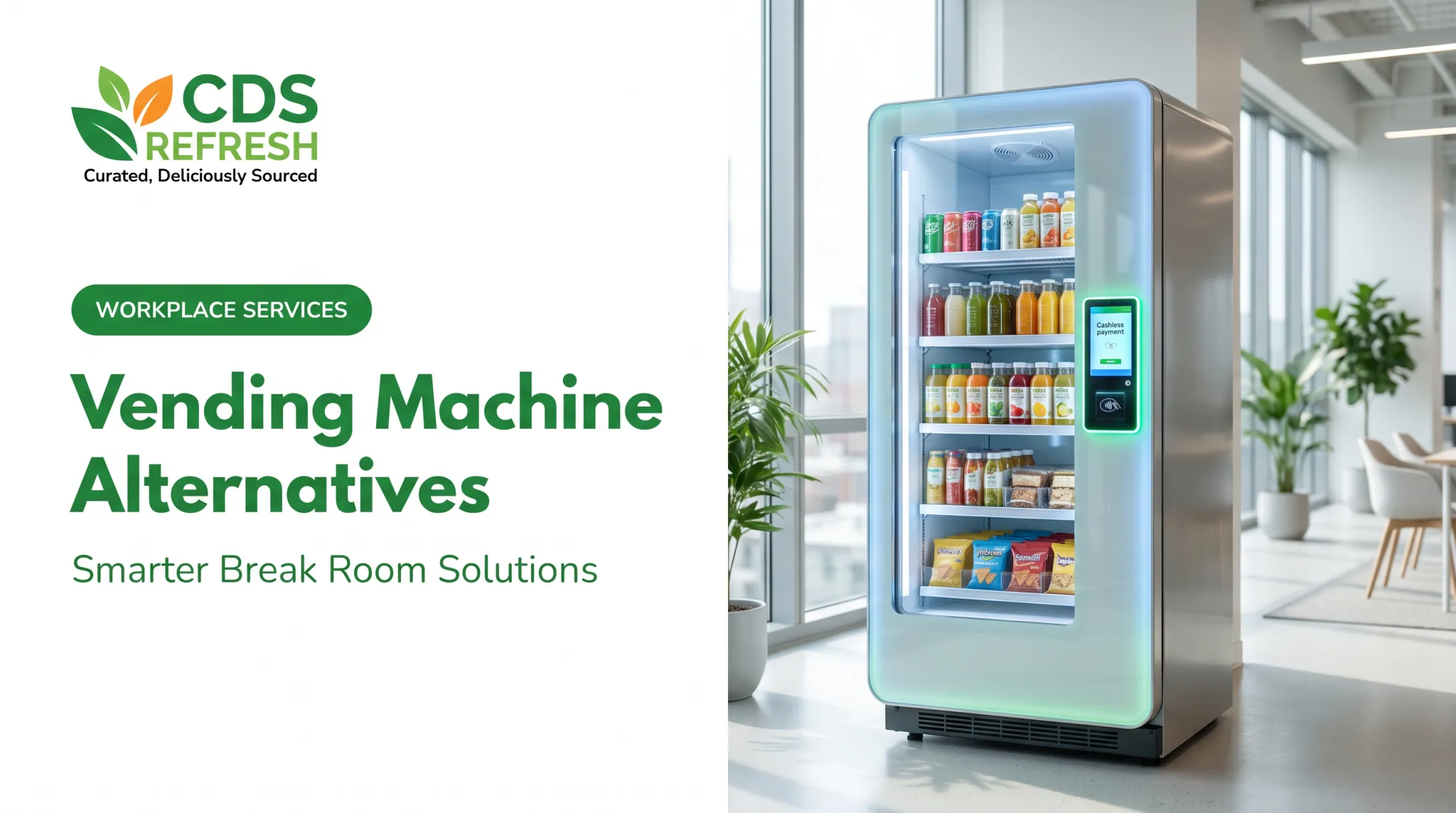

Across the DFW Metroplex, more offices, logistics hubs, and warehouses are asking for smarter, healthier refreshment setups. Micro-market locations jumped from 42,900 in 2023 to 55,770 in 2024, a 30% increase, according to Vending Market Watch's 2024 State of the Industry report. That's not a niche trend anymore.
This guide walks through the real decisions that go into designing one: location, layout, technology, product mix, and security, so your investment actually gets used.
Key Takeaways
- Location and layout decisions matter more than product selection alone
- Cashless technology now drives nearly 96% of micro-market sales
- Micro-market transactions run about 27% higher than vending transactions
- Local, experienced providers reduce installation risk and downtime
Choosing the Right Location and Layout
Placement makes or breaks a micro market. Tuck it in a rarely-used corner and even the best product mix won't get traffic. Vendor guidance from Cantaloupe's setup framework recommends assessing foot traffic, electrical access, and internet connectivity before placing fixtures, then positioning high-margin products where employees naturally pass by.
Placement principles that work:
- Centralize the market near existing break rooms or high-traffic hallways, not in an isolated back room
- Confirm power and internet access early, since self-checkout kiosks need both
- Keep the layout consistent once set, so employees build habits around where to find things
Space requirements vary by workplace. Manufacturer guidance from Seaga suggests markets generally need more room than a vending bank, though the right footprint depends on your headcount and existing floor plan. CDS Refresh custom-crafts each layout around a client's actual space rather than forcing a one-size-fits-all footprint.
Zoning matters, too. Pair complementary items, coffee near pastries, for instance, and keep perishables at eye level where they'll actually get noticed.

Creating an Open, Inviting Atmosphere
Open shelving changes how people behave in a break room. Instead of a closed vending bank that discourages lingering, a cafe-style layout invites people to browse, chat, and cross paths with coworkers from other departments. That informal mixing is hard to engineer any other way.
Small details carry weight here:
- Warm lighting instead of harsh fluorescents
- Comfortable seating that invites a five-minute break, not just a grab-and-go
- Branded signage, countertops, and millwork that make the space feel intentional
Done well, the market becomes a destination employees actually use and enjoy.
Integrating Smart Technology
Self-checkout is what makes 24/7 unattended access possible. Touchscreen kiosks with barcode scanning let employees grab what they want, scan it, and pay without a cashier present.
Payment expectations have shifted fast. Employees expect Apple Pay, Google Wallet, and tap-to-pay cards, not just cash or a swipe reader:
Cashless payments made up nearly 96% of all micro-market sales in 2024, according to Cantaloupe's 2025 Micropayment Trends Report, which also tracked more than 377 million micro-market transactions that year, a 4.8% increase over 2023.
Behind the scenes, AI-enabled smart coolers and real-time inventory monitoring keep shelves stocked and cut waste on perishables:
- Flag low stock before a shelf goes empty
- Track spoilage risk on fresh items
- Help operators rotate stock proactively
CDS Refresh builds AI-enabled smart coolers and cashless payment technology directly into every custom micro market it designs for DFW clients, so the tech is part of the layout from day one rather than bolted on later.

Designing Product Selection and Merchandising
Vending machines top out around 40 to 50 products. Micro markets routinely stock 150 to 400 or more, based on comparisons from both Nayax and Cantaloupe. That gap is what lets employees actually choose a meal, a snack, or a better-for-you option on a short break.
A broader selection typically includes:
- Fresh sandwiches, salads, and fruit
- Sugar-free, gluten-free, and dairy-free options
- Frozen meals and ice cream
- Local, freshly-prepared items rotated seasonally
The payoff shows up in transaction size, too. Average micro-market transactions run about $2.67, versus $2.11 for vending, roughly 27% higher, according to the same Cantaloupe report. More variety and better visibility translate directly into higher spend per visit.

Planogramming That Works
Smart merchandising puts fast-moving, higher-margin items where employees see them first—not on a bottom shelf.
Effective planograms usually prioritize:
- Eye-level placement for top sellers and higher-margin items
- Clear zones for fresh, frozen, snacks, and beverages
- Seasonal and locally prepared items rotated on a set cadence
- Adjustments based on each site's real purchase data
CDS Refresh sets this up through a collaborative planogram menu tailored to each workplace's buying habits, not a generic template.
Balancing Security and Design
Open shelving means anyone can pick up a product without a barrier in the way. That convenience is exactly what creates shrink risk. Industry-wide, operator surveys cited by Vending Market Watch report average shrink around 4%.
Common loss-prevention tools include:
- HD cameras positioned at checkout and shelving
- Smart cooler locks on higher-value perishables
- Transaction pattern monitoring that flags missed scans or abandoned carts
None of these tools eliminate theft entirely. They keep shrink low enough that the open, welcoming layout still feels intentional—not locked down.

Clear checkout signage and a culture of mutual trust reinforce that balance. Most employees respect self-checkout when they see the system is built on trust, not surveillance.
Managing Design Costs and Customization
There's a real tradeoff between speed and differentiation:
- Standardized fixtures install faster and cost less upfront
- Fully custom builds cost more initially but reflect your workplace culture instead of a generic kiosk
Neither option is automatically right. A one-on-one consultation up front should walk through:
- Budget constraints —what the space and spend can realistically support
- Workplace culture —how much branding and identity matter to leadership
- Timeline —install date versus how custom the build needs to be
CDS Refresh handles this through direct consulting rather than a fixed package, so the final design fits the budget, timeline, and personality of the workplace it serves.
Why Partner With a Local Micro Market Expert
Downtime kills the value of a micro market fast. If a cooler fails or a kiosk goes offline and it takes a week to get serviced, employees stop trusting the system, and usage drops.
A local provider with a stocked warehouse can swap equipment and troubleshoot on-site instead of leaving you waiting days for parts.
CDS Refresh brings over 25 years of DFW Metroplex experience, dating back to 1999. Founder Carl Shepherd, a US Navy veteran with supply chain and merchandising roots, built the company around personalized consulting—not off-the-shelf packages.
What you get with a local partner like CDS Refresh:
- Fully stocked warehouse and machine shop for fast equipment swaps
- On-site troubleshooting that limits downtime and lost trust
- Assortment and layout tailored to your workplace culture and goals
- Veteran-owned discipline in logistics, stocking, and follow-through
Frequently Asked Questions
Are micro markets a good investment?
Micro markets typically generate higher transaction values than vending and require less frequent servicing while improving employee satisfaction. That mix of revenue, lower service burden, and happier employees is why most workplaces treat them as a strong long-term investment.
What's the difference between a micro market and a vending machine?
Micro markets offer open shelving, self-checkout, and a wider product selection (150-400+ items). Vending machines dispense a limited, machine-controlled selection of roughly 40-50 items.
How much space do I need for a micro market?
Space needs vary by workplace, but many micro markets fit within the same footprint as an existing vending bank or break room. Fixture sizing is flexible and customized to your available space.
How are micro markets restocked and maintained?
Operators run scheduled restocking routes backed by real-time inventory alerts so low stock is caught before shelves go empty. Visit frequency scales with headcount and demand patterns.
Is a 24/7, unattended micro market safe from theft?
Modern tools like cameras, smart cooler locks, and transaction monitoring keep shrink low while preserving the convenience of self-service. No system eliminates theft completely, but these tools manage it effectively.
How much does it cost to install a micro market?
Most micro markets are installed under a managed service agreement, so cost depends on footprint, fixtures, product mix, and expected volume—not a one-size retail price. A site walkthrough is the fastest way to get a firm figure for your space.
Ready to design a micro market that fits your DFW workplace? Contact CDS Refresh at 214-618-0624 for a free site assessment and consultation.