
That gap creates real problems for the people keeping a hospital running through the night: nurses on 12-hour shifts, families camped out in waiting rooms, and patients who need something to eat after visiting hours end. Many facilities still rely on outdated vending machines stocked with candy bars and sugary soda, which frustrates staff trying to eat well during grueling shifts and does little for anxious visitors or recovering patients.
This guide covers what modern hospital vending should look like: healthier product mixes, the right machine types for different zones, smart placement strategy, and how a partner like CDS Refresh builds a program around your facility's actual needs.
Key Takeaways
- Vending fills the hours cafeterias can't cover, especially overnight and weekends
- Healthier options support staff energy and patient comfort without hurting revenue
- Strategic placement and easy access drive higher machine usage
- Cashless payment and smart inventory tech cut downtime and speed up service
- A dedicated vendor handles stocking and repairs so hospital staff don't have to
Why Hospital Vending Machines Matter
Hospitals are built to run around the clock, but food service rarely keeps pace. A 2022 study of 31 South Carolina hospitals found that only 26% had cafeterias open during late-night hours (11 p.m. to 2 a.m.), and 29% closed entirely on weekends. Every single hospital in the study, however, had vending machines accessible 24/7.
That is the gap vending fills: often the only food access point for large stretches of the night and weekend.
Who relies on it most:
- Night-shift nurses and technicians need quick, sustained energy — protein and coffee between rounds, not just sugar
- Overnight visitors staying at a bedside who will not leave to find a restaurant
- Ambulatory patients on extended stays who want a familiar snack beyond tray food
Malnutrition diagnosis codes already appear in roughly 3.7% to 4.1% of U.S. hospitalizations, according to a 2024 study using national inpatient data, and clinical literature suggests the true inpatient rate is higher. Vending will not fix malnutrition alone, but stocking machines with genuinely nourishing options is a controllable step hospitals can take toward better 24/7 food access.

Choosing Healthier Vending Options for Healthcare Settings
The days of candy-and-soda-only machines are fading, and hospitals have good reason to lead that shift. The CDC's Food Service Guidelines for Federal Facilities offer a useful benchmark, even though they aren't a hospital mandate: snacks capped around 200 calories, low sodium, minimal trans fat, and limited added sugar.
What healthier hospital vending typically includes:
- Fresh sandwiches and grab-and-go protein options
- Protein bars and nut-based snacks
- Low-sugar and sugar-free beverages
- Gluten-free and dairy-free alternatives
- Fair Trade and premium coffee
CDS Refresh builds exactly this kind of mix, offering sugar-free, gluten-free, and dairy-free selections alongside coffee partnerships with Starbucks, Peet's, Lavazza, and Pelican Rouge. With no purchasing restrictions, product selection can flex around what a facility's staff and visitors actually want.

That flexibility also raises a practical question: does healthier vending hurt revenue? Not necessarily.
A 2018 study published in the American Journal of Health Promotion tracked 23 healthcare and corporate locations that raised their healthy vending share from 20% to 80%. Average monthly calories dropped 16.7% and sodium fell 25.9%, while revenue and units sold showed no statistically significant change. That's one case study, not a universal guarantee, but it suggests healthier doesn't automatically mean less profitable.
The real key is balance. Total restriction backfires — people just stop using the machines. Offering choice, including some indulgent options alongside healthier ones, keeps usage and revenue steady.
Machine Types and Technology for Hospital Environments
Different zones of a hospital call for different equipment. A one-size-fits-all machine doesn't work when you're covering a pediatric wing, a staff lounge, and a busy outpatient corridor.
Common machine types include:
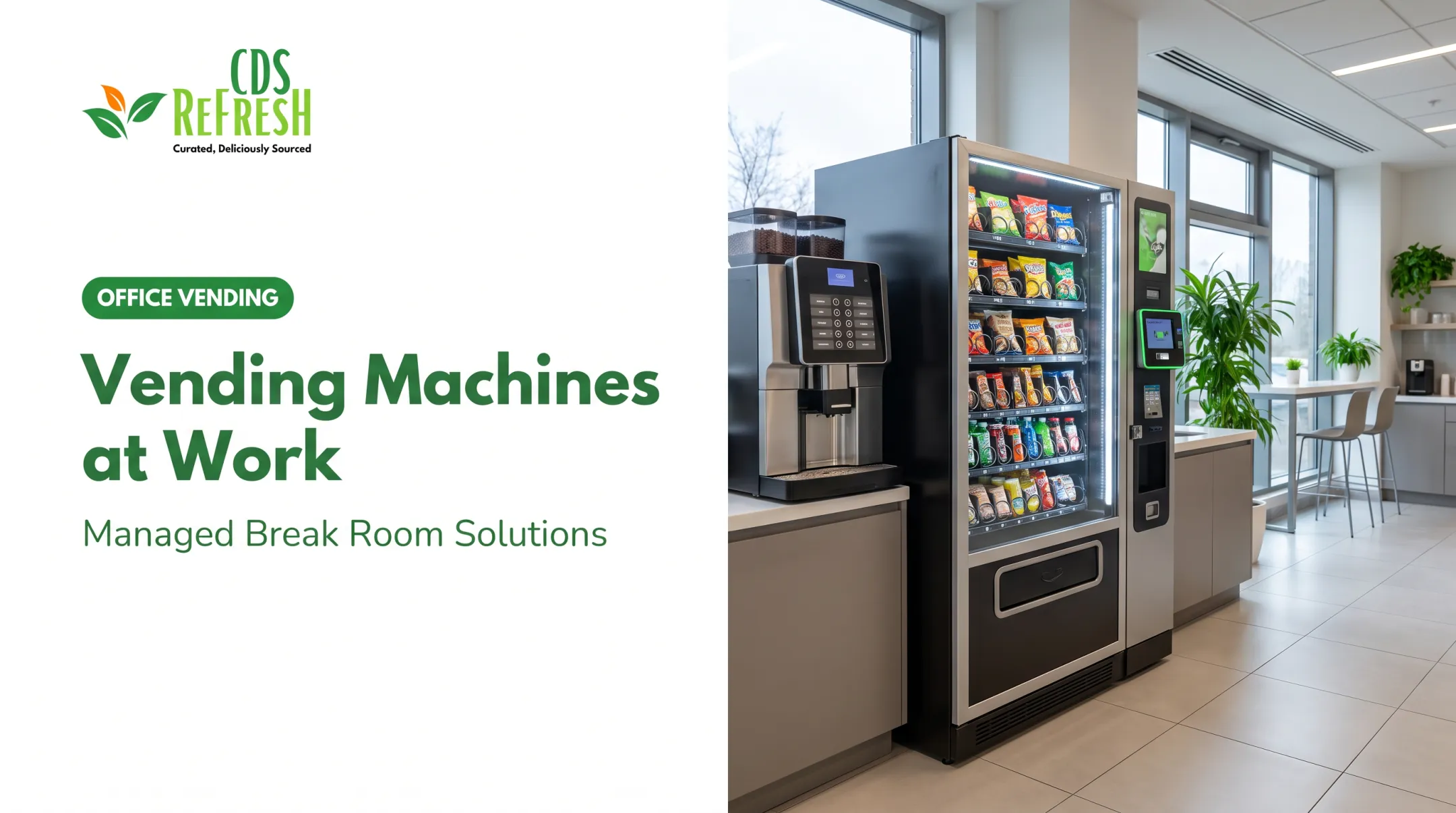
- Combo machines (snacks + drinks) for smaller clinic waiting rooms
- Smart coolers with AI-enabled inventory tracking for high-traffic corridors
- Coffee and hot beverage machines for overnight and early-morning staff
- Full-line vending for staff lounges needing variety
CDS Refresh's smart coolers use glass-door visibility and a "pay for what is taken" model. That gives hospital staff and visitors a self-checkout experience closer to a convenience store than a traditional machine.

Cashless Payment and Contact-Free Transactions
Cashless adoption has surged industry-wide. Noncash payment acceptance jumped from 69% in 2018 to 80% in 2020, according to NAMA's Industry Census data reported by Vending Times. In clinical environments, that shift does double duty: faster transactions and fewer shared touchpoints.
CDS Refresh equips its vending machines with Apple Pay, Google Wallet, and card readers as standard, while smart coolers accept credit cards through built-in digital interfaces.
ADA Accessibility Requirements
Under the 2010 ADA Standards, at least one vending machine of each type at a facility must meet accessibility requirements. That means a workable reach range (15 to 48 inches), one-hand operation, and activation force under 5 pounds. Hospitals serving patients with mobility or visual impairments should build this compliance into equipment placement, not treat it as an afterthought.
Strategic Placement Inside Hospitals
Where a machine sits matters almost as much as what's inside it. Placement affects whether people can actually reach it, whether it interferes with clinical traffic, and whether it fits the tone of the space around it.
In the South Carolina hospital study, 94% of facilities placed vending near cafeterias. Vending also appeared on nursing-unit floors in just over half of hospitals, even though nursing units exist on every floor and sometimes span up to eight stories. That's a meaningful accessibility gap for staff working far from the ground floor.

Ideal placement zones include:
- Staff lounges and break rooms
- Family waiting areas
- Outpatient corridors with steady foot traffic
- Near entrances to patient floors, not just the lobby
Sensitive areas like pediatric or maternity wings need a different approach: quieter units, more selective product mixes, and machines that don't dominate the visual space of a room designed to feel calm.
Maintenance, Support, and Zero-Downtime Service
In most retail settings, a broken vending machine is an inconvenience. In a hospital, it's a bigger deal.
A malfunctioning refrigeration unit can mean spoiled food sitting available for purchase. FDA Food Code requirements are explicit: machines vending time/temperature-sensitive food need automatic controls that block sales after a power or mechanical failure, until the unit is serviced and safely restocked.
That's why reliable restocking and rapid repair schedules matter more in a hospital than almost anywhere else.
CDS Refresh addresses this with a facility that functions as both warehouse and machine shop. Fully stocked replacement equipment means a malfunctioning machine can be swapped out quickly while the original unit is evaluated and repaired, rather than leaving a corridor without service for days.
Zero-downtime support typically includes:
- Replacement equipment on hand for fast machine swaps
- On-site troubleshooting with quick-turnaround repairs
- Real-time inventory monitoring to catch stockouts early
- Restocking timed to hospital traffic and shift patterns
The company's veteran-owned, logistics-driven approach (founded by a US Navy veteran with a background in supply chain management) shapes how it delivers operational reliability across the DFW Metroplex and Abilene service areas.
Beyond hardware, CDS Refresh offers one-on-one consulting to help facilities customize a vending and break room program around their departments, traffic patterns, and patient population, starting with a site assessment rather than a generic package.
Frequently Asked Questions
Can you put vending machines in hospitals?
Yes. Vending machines are commonly placed in waiting areas, staff lounges, and outpatient corridors, typically following the facility's own safety and nutrition guidelines rather than a single national standard.
Do all hospitals have vending machines?
Nearly all do. Vending covers the hours cafeterias can't, especially overnight and on weekends when staffed food service is limited or closed entirely.
What types of vending machines are best for hospitals?
Combo machines suit small waiting rooms, smart coolers work well in busy corridors, and coffee machines matter most for overnight staff. Many hospitals mix all three across different zones.
What sells the most in a vending machine?
Bottled water, salty snacks, and grab-and-go combo items remain top sellers. Demand for healthier snacks and low-sugar beverages has been rising steadily in healthcare settings.
Can hospitals offer healthy vending machine options?
Yes, and it can stay profitable. One case study of 23 healthcare and corporate locations found no significant drop in revenue after shifting most products to healthier options.
Who manages and restocks hospital vending machines?
Providers like CDS Refresh handle installation, stocking, and maintenance directly, using remote inventory monitoring and stocked replacement equipment so hospital staff aren't managing it themselves.