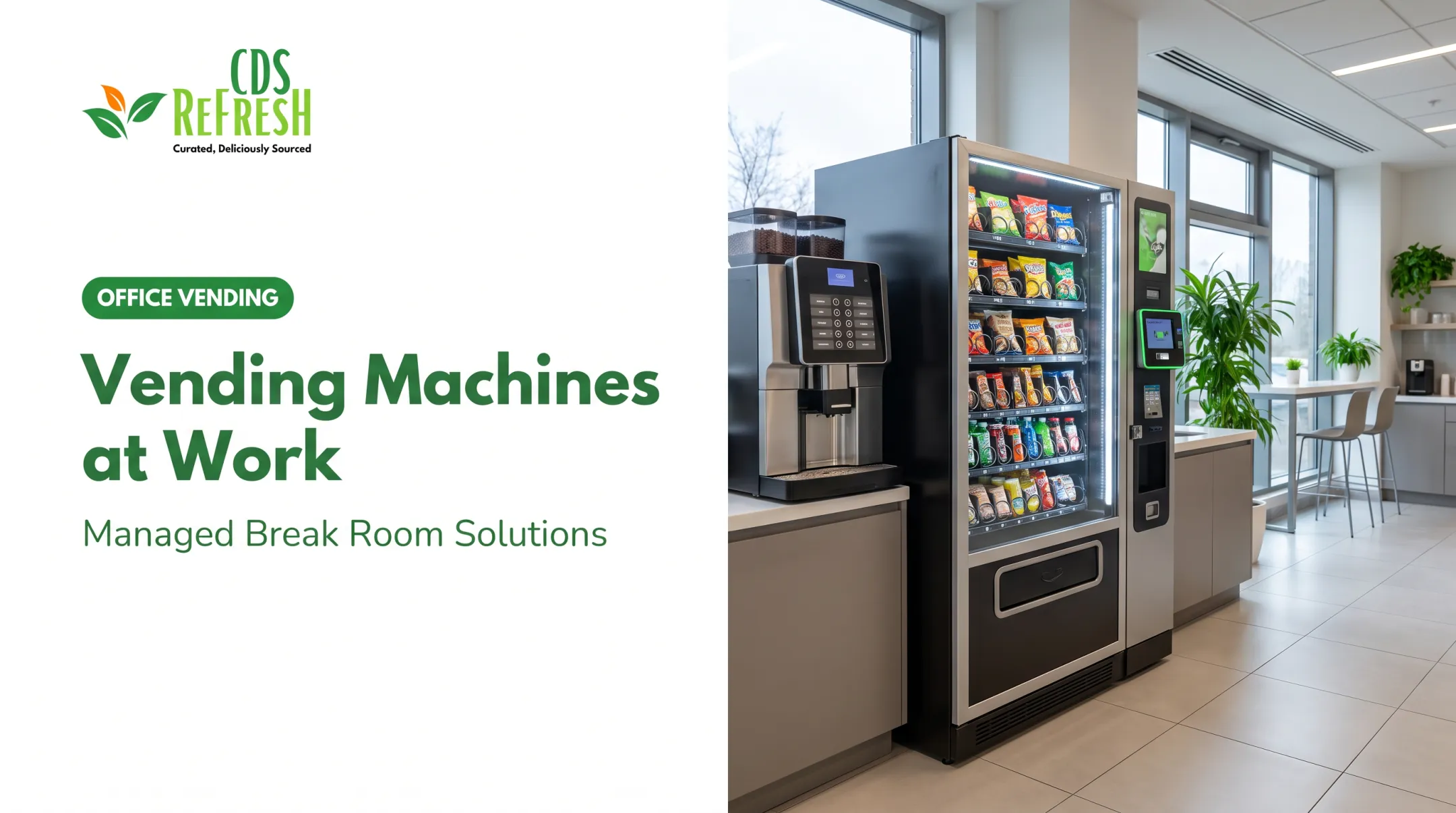

Outdated machines create real friction. Limited product variety, cash-only transactions, and zero visibility into stock levels frustrate employees and cost operators money. Cashless payments now make up 71% of vending-machine sales, according to Cantaloupe's 2025 Micropayment Trends Report — a 17% jump from the previous year.
This guide covers the technology powering modern vending, the food trends reshaping breakrooms, whether the business model still pays off in 2026, and how to pick the right partner.
Key Takeaways
- Touchscreens, cashless pay, AI tracking, and remote telemetry raise convenience and margins
- Smart coolers and micro-markets put fresh, healthy food on site—not just bagged snacks
- Profitability in 2026 hinges on placement and product mix, not machine count
- CDS Vending removes upfront equipment costs for DFW businesses under a fully managed model
What Are High-Tech Vending Systems?
High-tech vending systems are network-connected, cashless-enabled machines that replace mechanical coil dispensing with smart, monitored retail. Each unit runs like a connected mini-storefront: shoppers pay digitally, inventory updates automatically, and operators see sales data without a site visit.
Four components define the category:
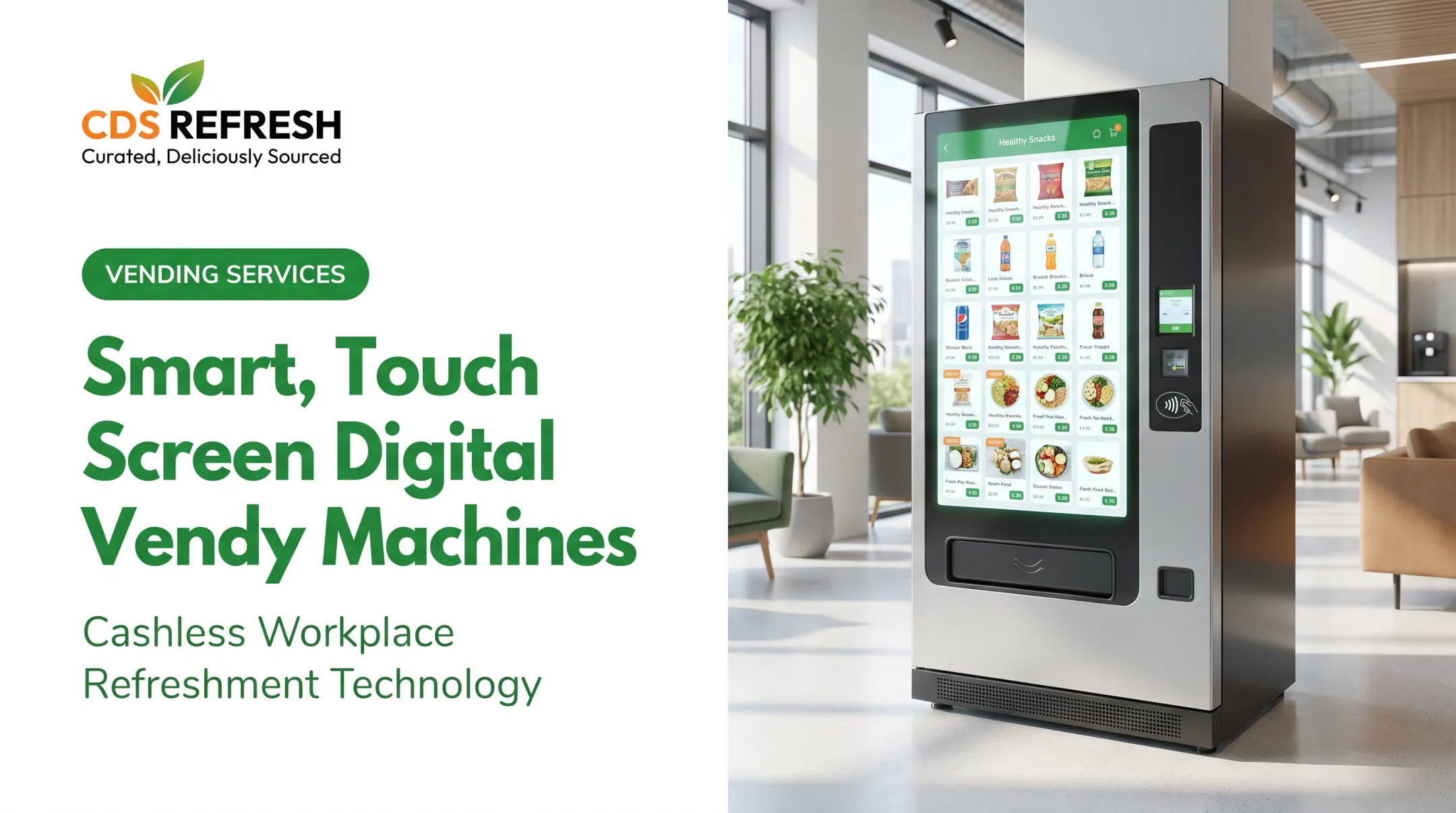
- Touchscreen UI — lets shoppers browse, search, and pay without fumbling for exact change
- Cashless payment stack — supports credit cards, mobile wallets, and app-based purchases
- Connected telemetry and DEX reporting — sends sales and stock data back to operators in real time
- MDB/ICP control bus — the internal wiring that lets payment systems, screens, and dispensing mechanisms talk to each other
Beyond the Snack Machine
Traditional vending machines fall short in three ways: limited product variety, cash-only transactions, and zero visibility until someone physically checks the machine. High-tech systems fix all three.
These capabilities ship in three common formats:
- Micro-markets — open-shelf, self-checkout mini stores
- Smart coolers — AI-enabled refrigerators with "grab and go" checkout
- Smart cabinets — enclosed units with digital inventory tracking
CDS Vending offers AI-enabled smart coolers and micro-markets as part of its DFW workplace refreshment solutions, giving businesses access to this technology without buying equipment outright.

Latest Technologies in High-Tech Vending Systems
The pace of innovation in vending has accelerated. Here's what's actually changing how these machines work.
AI Product Recognition
Smart coolers now use computer vision to detect exactly what a customer removes and charge automatically. No barcode scan, no button press. 365 Retail Markets' PicoCooler Vision, for instance, charges customers for exactly what they take using automatic product recognition.
Cashless Payment Everywhere
Contactless and mobile payments aren't a nice-to-have anymore; they're the default. Mobile wallet transactions grew over 300% year-over-year, now representing 29% of all cashless vending sales. Modern machines support:
- Apple Pay and Google Wallet
- Contactless credit and debit cards
- Mobile app-based purchases
- Campus and loyalty cards
More than 70% of vending machines are now equipped to accept cashless payments, and 96% of operators rate the technology a smart investment, according to VendingMarketWatch's 2024 industry report. CDS Vending's equipment supports mobile payments, Apple Pay, and Google Wallet alongside traditional cash and card readers.

Real-Time Inventory and Predictive Maintenance
Connected machines report stock levels and sales data continuously, triggering restocking alerts before a slot goes empty. The same connectivity flags mechanical issues early, so a technician can fix a problem before the machine sits empty or breaks down.
CDS uses cloud-connected machines for remote monitoring and real-time inventory management, helping avoid stockouts and keep replenishment on schedule. That same sales data feeds route optimization software, which plans more efficient delivery runs and cuts fuel and labor costs.
Best Food and Beverage Options for Modern Vending Machines
Vending used to mean chips, candy, and soda. Not anymore.
Fresh Meals, Not Just Snacks
Open-shelf smart coolers and cabinets let operators stock real food: sandwiches, salads, yogurt, hummus, and fruit. This shift matters because 65% of operators say clients now request better-for-you assortments, per the latest NAMA census reported by Vending Times.
Health-Conscious Options Employees Expect
Employees increasingly expect options that fit their dietary needs, not just their cravings. That means:
- Sugar-free and low-sugar snacks
- Gluten-free packaged and fresh items
- Dairy-free alternatives
- Locally prepared fresh meals, restocked often instead of sitting for weeks
CDS Vending customizes snack and micro-market selections around each workplace’s dietary needs, sourcing fresh food locally and delivering it quickly rather than relying on long storage times.
Premium Beverages That Rival the Corner Café
Coffee has become a differentiator. Employees compare their office setup to the coffee shop down the street, and basic drip coffee doesn't cut it anymore.
CDS Vending curates premium coffee programs featuring Starbucks, Lavazza, Peet's, and Pelican Rouge. Equipment such as Lavazza's Expertine and Cafection's Enova X9 serves espresso, cappuccino, and other specialty drinks right in the break room.

Is High-Tech Vending Still Profitable in 2026?
Short answer: yes, but the math has changed.
Location and Format Beat Machine Count
There's no fixed machine count that locks in strong returns. Location traffic, machine type, and technology adoption matter more than raw quantity. A single well-placed micro-market in a 300-person office can outperform five snack machines scattered across low-traffic hallways.
Where the Margins Actually Live
Some formats simply perform better than others:
| Format | Average 2024 Ticket | Comparison to Traditional Vending |
|---|---|---|
| Traditional vending | $2.11 | Baseline |
| Micro-market | $2.67 | 27% higher |
| Smart Store | $4.25 | 101% higher |
Source: Cantaloupe's 2025 Micropayment Trends Report
Micro-market sales topped $1 billion for the first time in 2024, and projections put year-ahead growth at 40% for micro-markets versus 8% for traditional vending. Fresh and healthy items command higher margins than basic snacks, which explains the gap.

What This Means for Workplace Programs
Higher tickets and faster growth in micro-markets and smart formats show a clear pattern: employees spend more when selection, freshness, and checkout are easier. For facilities and HR leaders, that means stronger break-room use without cafeteria overhead—especially when a managed provider handles stocking, maintenance, and cashless payments.
Why Partner with a Technology-Forward Vending Provider
Technology alone doesn't run a vending program. Logistics, maintenance, and stocking discipline matter as much as the AI in the cooler.
CDS Refresh (CDS Vending) has served the DFW Metroplex and Abilene markets since 1999, pairing that operational experience with AI-enabled smart coolers, micro-markets, and real-time inventory management. As a veteran-owned business, the company applies military-grade logistics discipline to every route, restock, and repair.
What actually matters when choosing a provider:
- No purchasing restrictions: Customize selections around your team's preferences, including sugar-free, gluten-free, and dairy-free options
- Fully stocked replacement equipment: Backup machines ready to swap in fast when something breaks
- Quick-turnaround troubleshooting: Trained technicians repair equipment on-site instead of leaving machines down for weeks
- Zero upfront investment: CDS installs and maintains all equipment, so you get modern breakroom technology without buying hardware
Reliable equipment and responsive service signal that the company invests in employees' day-to-day experience—not only when machines are new, but every time someone walks into the breakroom.
Frequently Asked Questions
How many vending machines do you need to make $100k?
There's no fixed number. Revenue depends on machine type, location traffic, and product mix. A single high-traffic micro-market can out-earn several traditional snack machines.
What is the most profitable vending machine to own?
Smart coolers, micro-markets, and specialty beverage machines typically deliver higher margins than traditional snack machines. Fresh and premium items command higher average transaction values.
Are high-tech vending systems still profitable in 2026?
Yes. Profitability remains strong when you pair cashless payments with data-driven inventory management. Unattended retail demand continues to grow as workplaces upgrade from traditional machines.
What are the latest technologies in high-tech vending systems?
AI-driven product recognition, cashless and mobile payments, and real-time telemetry for inventory and maintenance are now standard. Together they cut stockouts and speed up checkout.
Do I need an LLC to operate high-tech vending systems?
It's not legally required everywhere, but forming an LLC is commonly recommended for liability protection. Consult a legal or tax advisor to determine what fits your specific situation.
What are the best food vending machines for high-tech vending systems?
Smart coolers and open-shelf cabinets support fresh, healthy food like sandwiches, salads, and dietary-specific snacks. These formats outperform traditional snack-only machines in both variety and margin.