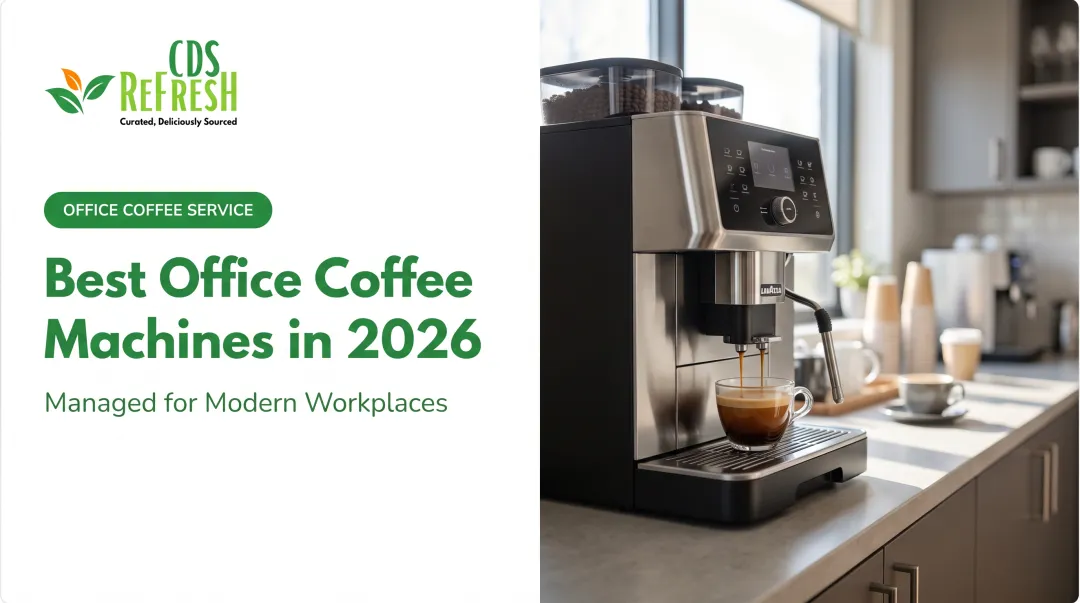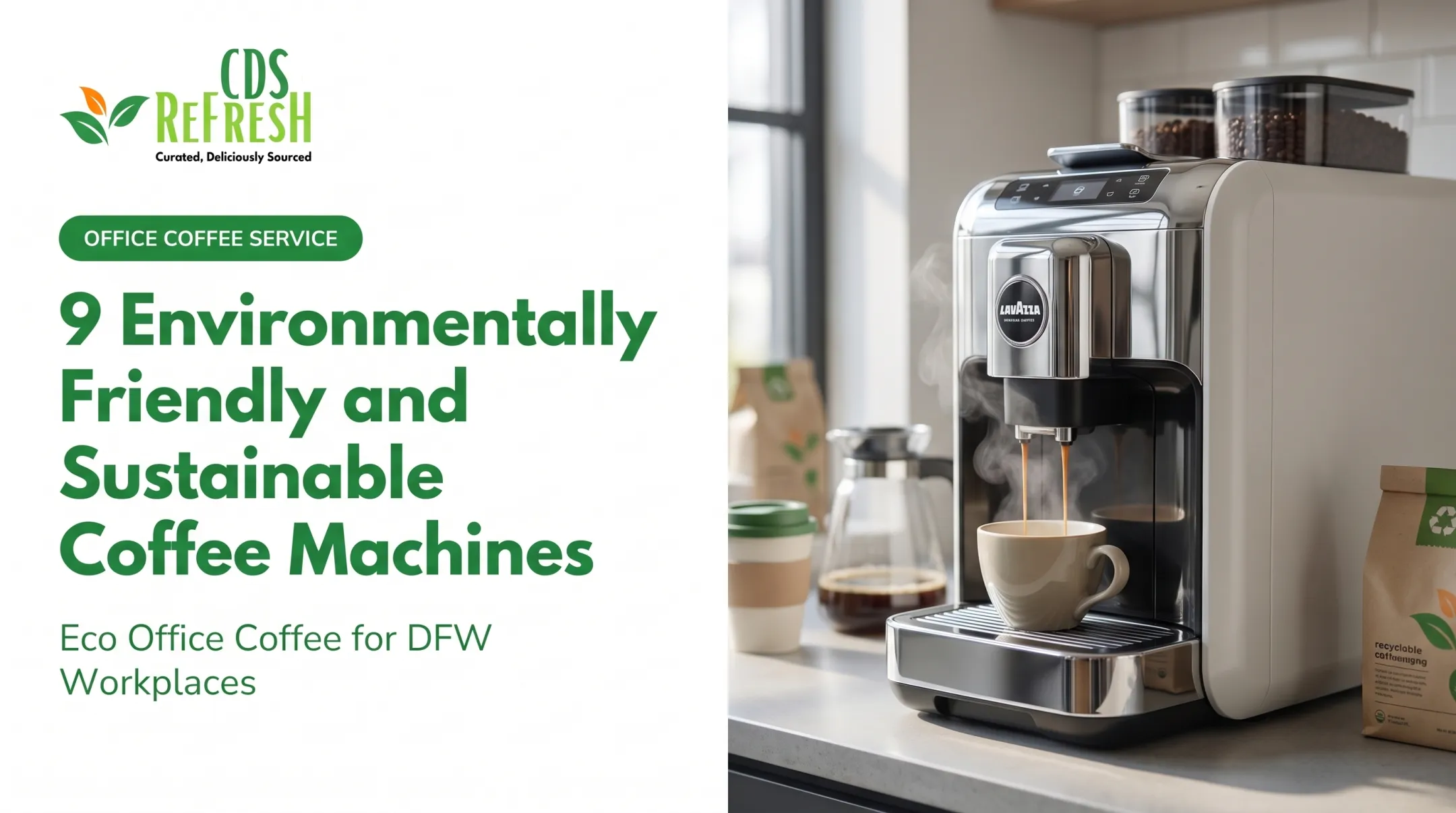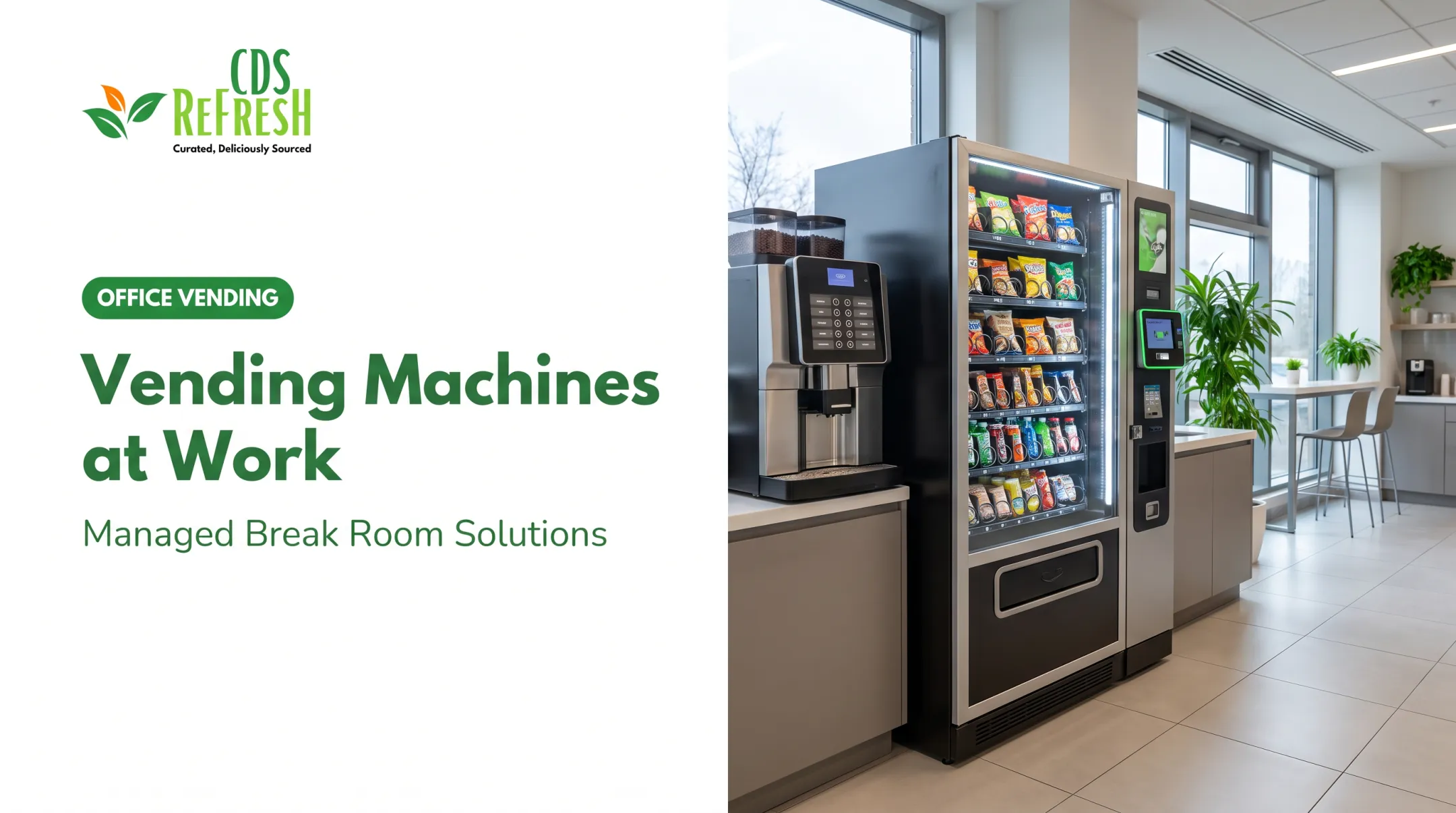

A good coffee station is one of the cheapest ways to shift office culture. No renovation budget required, just some smart choices about layout, equipment, and upkeep.
This guide covers coffee station ideas by office size, the equipment worth investing in, setup logistics, and when it makes sense to bring in a professional office coffee service instead of managing it yourself.
Key Takeaways
- On-site coffee stations cut caffeine runs and give teams a natural place to connect
- Match the setup to office size—from a compact counter corner to a full self-serve bar
- Prioritize quality machines, varied beans, and eco-friendly accessories over footprint size
- A managed office coffee service removes the burden of stocking, cleaning, and machine repairs
Office Coffee Station Ideas by Office Size and Style
Not every office needs (or has room for) a full coffee bar. The right approach depends on square footage and headcount.
Small Office Coffee Station Ideas
Small offices need setups that maximize counter efficiency without crowding the room:
- Wall-mounted shelving paired with a compact countertop to keep floor space open
- Single-serve or pod machines that create a small barista corner without taking over the room
- Floating shelves and pull-out drawers that store mugs and supplies while keeping counters clear
The goal for a small footprint is simple: pick one solid machine, keep supplies organized vertically, and avoid clutter that slows people down during the morning rush.
Large Office and Coworking Coffee Bar Ideas
Bigger spaces can support a coffee experience that doubles as a gathering spot. Match the finish to how people use it—clean and minimal for quick turns, or warmer lounge styling when the station is meant for lingering. Strong setups often include:
- Custom countertop bars with a bean-to-cup or espresso machine as the centerpiece
- Coworking-style lounges with barstools that encourage people to linger and talk
- Multi-level open shelving to display mugs, beans, and decor
- Branded signage, plants, and artwork that reinforce company identity
- Multiple beverage stations (coffee, tea, cold brew) for departments with different preferences

Larger teams also need higher-throughput equipment. Commercial units like the Cafection Emblem are built for volume, which matters when 50+ people cycle through before 9 a.m.
Must-Have Equipment and Supplies for Any Coffee Station
Regardless of size, certain elements separate a station people actually use from one they avoid.
Core equipment:
- Drip coffee maker or bean-to-cup machine
- Grinder (fresh grounds make a noticeable difference)
- Water filtration or dispenser for cleaner-tasting coffee
Consumables to stock:
- Regular, decaf, and flavored roasts
- Creamers and milk alternatives
- Sweeteners, tea, and hot chocolate
Accessories:
- Mugs, stir sticks, filters, napkins
- Eco-friendly compostable cups
A "flavor splash" bar—syrups, alt-milks, and spices set out for self-serve—lets employees personalize each cup instead of settling for whatever's brewed. It costs little and gets used constantly.
Brand matters too. Offering Starbucks, Lavazza, or Peet's instead of generic grocery-store coffee changes how employees perceive the whole amenity. It signals the company invested in something they'd actually choose for themselves.
Sourcing machines, beans, filters, and restocking on your own still takes time. A turnkey office coffee service removes that busywork. CDS Refresh installs and maintains premium setups from partners like Lavazza, Flavia, and Cafection, with name-brand coffees and cashless payment options, so the station arrives ready to use instead of pieced together in-house.
How to Arrange and Set Up an Office Coffee Station
Placement and flow matter as much as the equipment itself.
Choosing a location:
- Pick a spot that's accessible without cutting through high-traffic bottlenecks
- Ensure good lighting and ventilation
- Avoid placing it directly next to desks, since grinder noise and foot traffic add up
Zoning the station:
- Brewing area – machine, water source, filters
- Condiment zone – creamers, sweeteners, flavor add-ins
- Cup and mug storage – mugs and lids, kept separate from the brewing area to avoid bottlenecks

This three-zone approach keeps lines moving instead of clogging around a single counter.
Keeping it stocked: Assign rotating restocking duty, or hand it to a managed service so nobody's job description quietly expands to include "coffee inventory."
A well-run station does more than keep cups full. A Facilities Dive report found that nearly 70% of surveyed workers said socializing with coworkers made them more productive. The same share said it made them more likely to stay at their job. A coffee station is one of the easiest places for that socializing to happen.
Boosting Engagement with Eco-Friendly and Wellness-Focused Additions
Employees increasingly notice whether a company backs its values with its breakroom choices.
- Fair Trade coffee supports farmer communities and sustainable sourcing. According to Fair Trade USA, certified coffee partners generated $31 million in Community Development Funds in 2021 alone.
- Compostable cups and stirrers cut landfill waste. A 2024 Forbes-reported field test found compostable plastics averaged 98% disintegration in industrial composting facilities.
- Sugar-free, dairy-free, and low-calorie options support employees managing dietary goals without singling anyone out.

CDS Refresh's coffee program includes Fair Trade options and prioritizes compostable or biodegradable cups wherever possible. Offices that want wellness beyond the brew can pair the coffee station with AI-enabled smart coolers, which keep healthier beverages stocked and monitored without manual checks.
Why Partner with a Professional Office Coffee Service
DIY coffee stations work fine until the grinder breaks on a Monday morning or nobody remembers to reorder creamer for two weeks. That's usually the point offices start looking at a managed service.
What a professional provider handles:
- Equipment installation and ongoing maintenance
- Restocking so no one adds coffee duty to their actual job
- Troubleshooting when a machine acts up
Those are the gaps a managed partner fills. CDS Refresh has served DFW-area businesses for over 25 years with customized coffee, micro-market, and break room programs. One-on-one consulting helps design a station that fits the office, from a single compact machine to a multi-station setup for a larger team.
Because CDS Refresh keeps a fully stocked equipment inventory, a malfunctioning machine can often be swapped for a replacement while the original gets serviced. Coffee keeps flowing instead of waiting on a shop repair.
Frequently Asked Questions
What are some good things to put in a coffee station?
Stock quality coffee and tea, creamers and sweeteners, mugs, filtered water, and eco-friendly cups and stirrers. Adding flavor syrups or plant-based milks lets employees customize their drinks.
How do I arrange a coffee station?
Zone it into three areas: brewing equipment, condiments, and cup storage. Place it somewhere accessible but away from high-traffic bottlenecks, and keep it clean and stocked.
How much space do I need for an office coffee station?
A small countertop corner works fine for compact offices. Larger teams may dedicate a full nook or bar area with multiple machines and seating.
How often should office coffee equipment be cleaned or maintained?
Basic upkeep, like wiping down surfaces and emptying grounds, should happen daily. Schedule deeper descaling and professional servicing every 1–3 months so machines stay reliable and coffee tastes fresh.
Should we hire a service to manage our office coffee station?
Smaller offices can often self-manage with a rotating restocking schedule. Larger teams typically benefit from a professional coffee service for consistent quality and less internal workload.
What coffee equipment is essential for an office setup?
At minimum, you need a coffee maker or bean-to-cup machine, a grinder, storage containers for beans and supplies, and basic cleaning tools for daily hygiene and upkeep.